

In today's fast-paced world, air pollution is a major problem. Various pollutants are responsible for polluting the air; formaldehyde, i.e., CH20, is among them. So here in this article, we will focus on formaldehyde-CH20 as a pollutant, its exposure i.e. formaldehyde exposure, their health effects, safety limits, and effective solutions, all with respect to industrial air quality improvement.
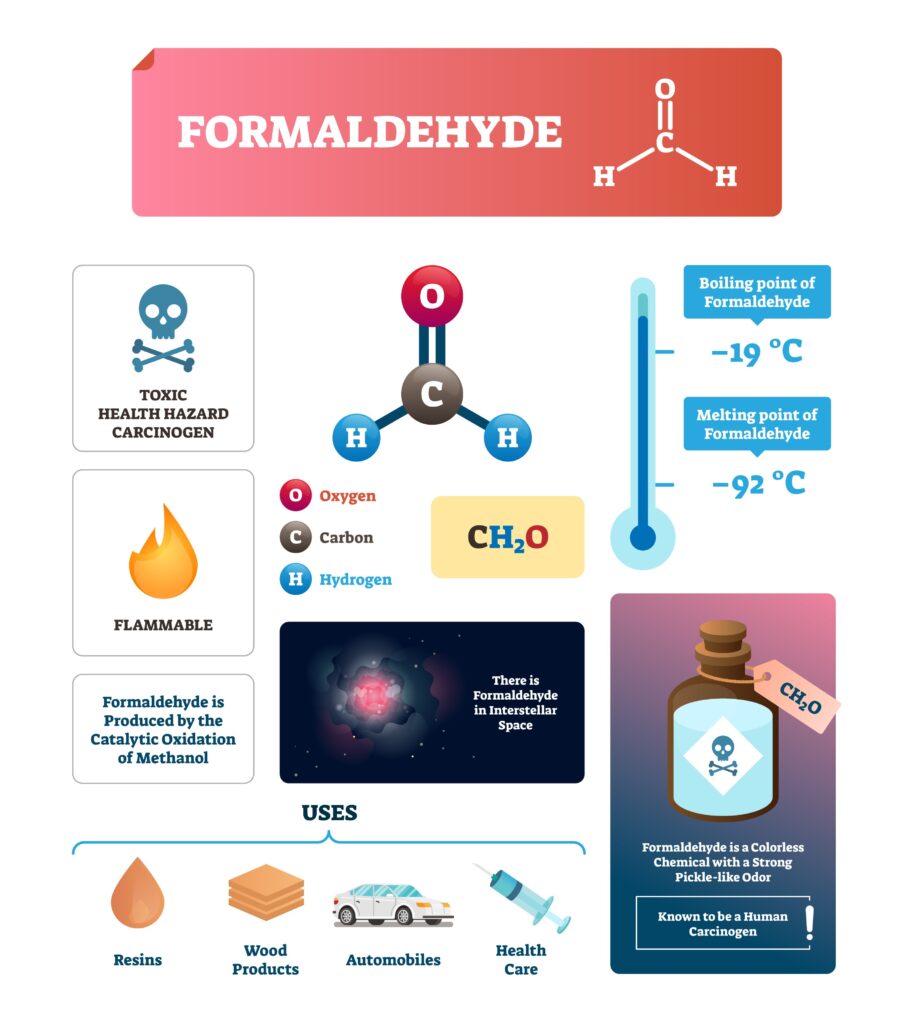
Formaldehyde is a naturally occurring organic compound with the molecular formula HCHO or CH2O or in common names methanal. It is made up of two hydrogen molecules, a single carbon molecule, and a single oxygen molecule.
Formaldehyde is used mainly to produce resins used in particleboard products and as an intermediate in the synthesis of other chemicals. Formaldehyde is used in many industries, such as glues and resins, dyes, textiles, disinfectants, building materials, automobile parts, embalming, and laboratories.
According to inchem.org, here are the sources of formaldehyde:
Natural sources
Formaldehyde occurs naturally in the environment and is the product of many natural processes. It is released during biomass combustion, such as in forest and brush fires (Howard, 1989; Reinhardt, 1991). In water, it is also formed by the irradiation of humic substances by sunlight (Kieber et al., 1990).
As a metabolic intermediate, formaldehyde is present at low levels in most living organisms. It is emitted by bacteria, algae, plankton, and vegetation.
Anthropogenic sources
Anthropogenic sources of formaldehyde include direct sources such as fuel combustion, industrial on-site uses, and off-gassing from building materials and consumer products.
Industrial releases of formaldehyde can occur at any stage during the production, use, storage, transport, or disposal of products with residual formaldehyde. Formaldehyde has been detected in emissions from chemical manufacturing plants. Formaldehyde has been detected in the off-gassing of formaldehyde products such as wood panels, latex paints, new carpets, textile products, and resins. While emission rates have been estimated for some of these sources, there is insufficient data to estimate total releases. In some countries, there have been regulatory and voluntary initiatives to control emissions from building materials and furnishings, since these are recognized as the major sources of elevated concentrations of formaldehyde in indoor air.
People are exposed primarily by inhaling formaldehyde gas or vapor from the air or by absorbing liquids containing formaldehyde through the skin. Workers who produce formaldehyde or products that contain formaldehyde—as well as laboratory technicians, certain health care professionals, and mortuary employees—may be exposed to higher levels of formaldehyde than people in the general population.
The general public may be exposed to formaldehyde by breathing contaminated air from sources such as pressed-wood products, tobacco smoke, and automobile tailpipe emissions. Another potential source of exposure to formaldehyde is the use of unvented fuel-burning appliances, such as gas stoves, wood-burning stoves, and kerosene heaters.
Some examples of workers at risk of being exposed to formaldehyde include the following:
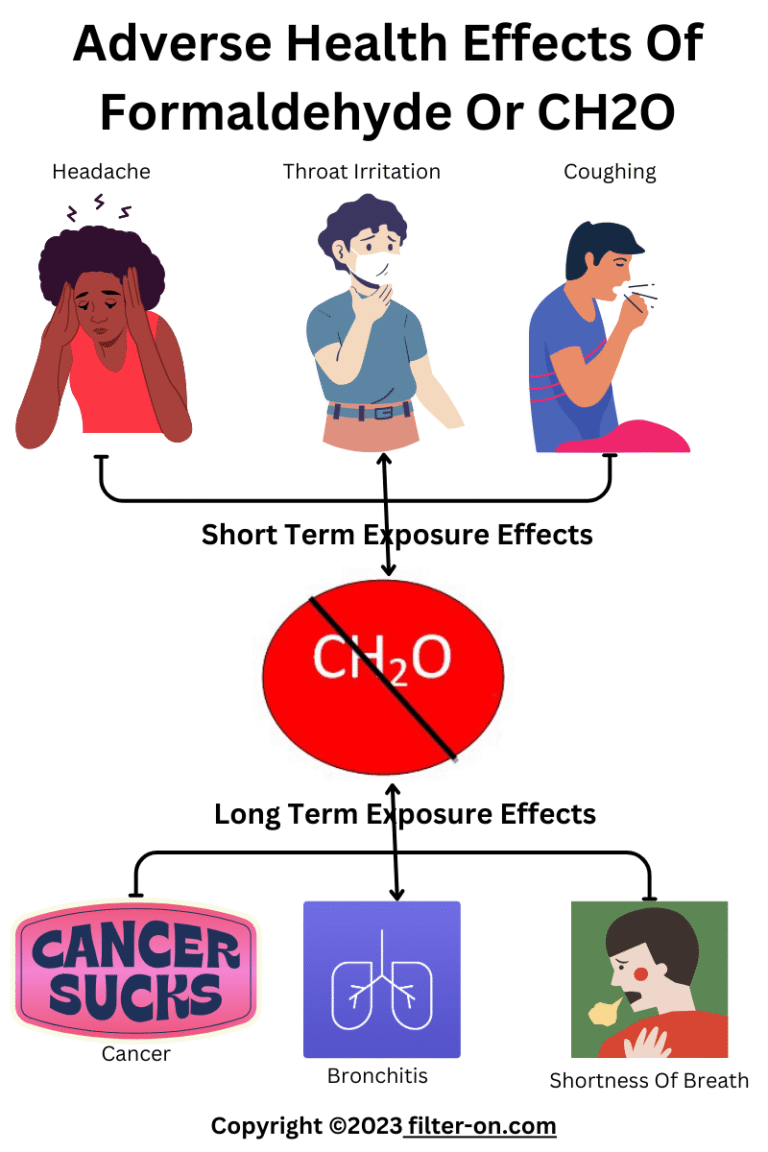
There are various health concerns for workers due to formaldehyde inhalation.
As per EPA documentation, the following health impacts have been found due to exposure to formaldehyde:
Acute Effects:
The major toxic effects caused by acute formaldehyde exposure via inhalation are eye, nose, and throat irritation and effects on the nasal cavity. Other effects seen from exposure to high levels of formaldehyde in humans are coughing, wheezing, chest pains, and bronchitis. Ingestion exposure to formaldehyde in humans has resulted in corrosion of the gastrointestinal tract, inflammation, and ulceration of the mouth, esophagus, and stomach.
Chronic Effects (Noncancer):
Chronic exposure to formaldehyde by inhalation in humans has been associated with respiratory symptoms and eye, nose, and throat irritation.
Repeated contact with liquid solutions of formaldehyde has resulted in skin irritation and allergic contact dermatitis in humans.
Reproductive/Developmental Effects:
An increased incidence of menstrual disorders was observed in female workers using urea-formaldehyde resins. However, possible confounding factors were not evaluated in this study. (1,2) A study of hospital equipment sterilization workers did not report an association between formaldehyde exposure and increased spontaneous abortions.
Developmental effects, such as birth defects, have not been observed in animal studies with formaldehyde.
Cancer Risk:
Occupational studies have noted statistically significant associations between exposure to formaldehyde and an increased incidence of lung and nasopharyngeal cancer. This evidence is considered “limited” rather than “sufficient” due to possible exposure to other agents that may have contributed to the excess cancer.
In short, formaldehyde is responsible for the following health effects on workers (Categorization of Health Effects):
Short-term:
Exposure to breathing formaldehyde can cause:
Skin contact with formaldehyde can cause:
Swallowing formaldehyde can cause:
Long-term:
Long-term exposure to formaldehyde can cause:
Here are some solutions for controlling the exposure to formaldehyde.