

Clearing the Air: Understanding NO₂ Pollution, Health Risks, Safety Standards, and Industrial Solutions
Air pollution is an important and serious issue, as the world is facing critical consequences due to its impact on people's health. Government . agencies took serious action against those who caused pollution. Nitrogen oxide is one of the primary air components in the air and, if inhaled, is dangerous to health. In this article, we will discuss nitrogen oxide (NO₂ )'s role as a pollutant, health effects due to NO₂ Pollution, safety limits, and industrial solutions and precautions amid its exposure.
What is nitrogen dioxide (NO₂ ) & NO₂ Pollution
Nitrogen dioxide (NO₂ ) is a gaseous air component composed of nitrogen and oxygen. NO₂ is one of a group of related gasses called nitrogen oxides, or NOx. NO₂ is created when fossil fuels such as coal, oil, methane gas (natural gas), or diesel are burned at high temperatures.
Nitrogen Dioxide (NO₂) as a Pollutant:
Natural Sources of Nitrogen Dioxide (NO₂):
Nitrogen dioxide (NO₂) can be formed from both natural and human activity. Natural sources include:
- lightning strikes
- volcanoes
- oceans
- biological decay
Combustion creates oxides of nitrogen, a major portion of which is nitrogen dioxide. When vehicles emit oxides of nitrogen, 90 to 95 percent of the emissions are nitric oxide (NO).
However, nitric oxide quickly oxidizes in outdoor air when reacting with oxygen, ozone, and volatile organic compounds (VOCs) to form nitrogen dioxide. The oxidation process occurs indoors, but at a slower rate.
Man-Made Sources:
The main source of nitrogen dioxide resulting from human activities is the combustion of fossil fuels (coal, gas, and oil), especially fuel used in cars.
Industrial sources that are responsible for nitrogen oxide (NO₂) are as follows:
Welding:
Nitrous gasses are often responsible for acute poisoning when welding. They occur during gas welding and arc welding processes.
Other than welding, nitrogen dioxide (NO₂) can be found in the following processes:
- Nitric acid manufacturing
- Titanium pickling
- Stainless steel pickling
- Aluminum bright dip
- Metal finishing
- Precious metals refining
- Chemical etching
- Fertilizer production
- Glass making
- Industrial boilers
- Aqueous chemical production
Health Impacts of Nitrogen Dioxide(NO₂ Pollution):
Breathing air with a high concentration of NO₂ Pollution can irritate the airways in the human respiratory system. Such exposures over short periods can aggravate respiratory diseases, particularly asthma, leading to respiratory symptoms (such as coughing, wheezing, or difficulty breathing), hospital admissions, and visits to emergency rooms. Longer exposures to elevated concentrations of NO₂ Pollution may contribute to the development of asthma and potentially increase susceptibility to respiratory infections. People with asthma, as well as children and the elderly, are generally at greater risk for the health effects of NO₂ Pollution.
NO₂ , along with other NOx, reacts with other chemicals in the air to form both particulate matter and ozone. Both of these are also harmful when inhaled due to their effects on the respiratory system.
As per the 1998 National Research Council Committee on Toxicology study, which investigated incidents of accidental exposure to NO₂ Pollution, Workers in agriculture, mining explosions, space exploration, and military activities have been accidentally exposed to high concentrations of NO₂ Pollution, resulting in a wide range of severe medical ailments, including:
- breathing difficulty
- fever
- bronchial pneumonia
- acute bronchitis
- death
In short, the health impact of nitrogen dioxide categories is:
Short-term:
Breathing nitrogen oxides can cause:
- Irritation of the respiratory system, eyes, and skin
- Aggravation of respiratory diseases, particularly asthma
- Coughing and choking
- Nausea
- Headache
- Abdominal pain
- Difficulty breathing
Skin and eye contact with nitrogen oxide gases or liquid nitrogen dioxide can cause irritation and burns.
Long-term:
Long-term exposure to nitrogen dioxide can cause:
- Asthma
- Respiratory infections
Exposure to very high levels of nitrogen oxides may cause:
- Death
- Genetic mutations
- Harm to a developing fetus
- Decreased female fertility
- Spasms
- Swelling of the throat
- Rapid pulse
- Dilated heart
Safety Limits for Nitrogen Dioxide (NO₂ Pollution):
In the industrial environment, nitrogen dioxide (NO₂) has exposure limits set by OSHA that are as follows:.
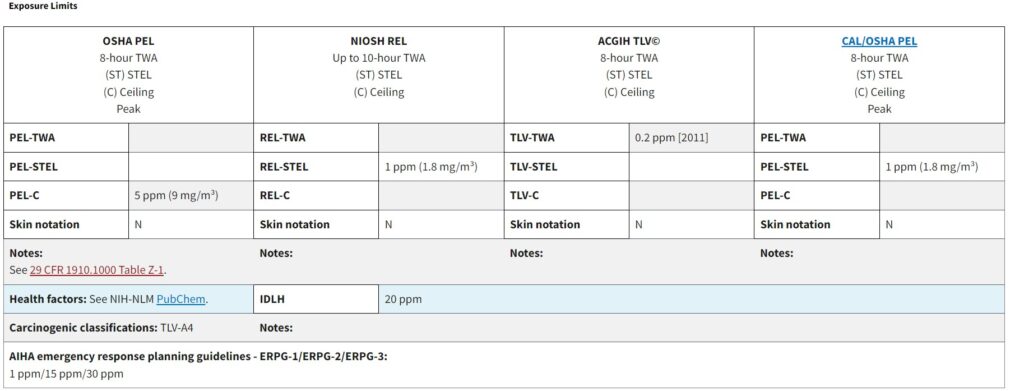
The EPA limit for Nitrogen Dioxide(NO₂) exposure is as follows:
The official level of the annual NO₂ standard is 0.053 ppm, equal to 53 ppb, which is shown here for the purpose of clearer comparison to the 1-hour standard.
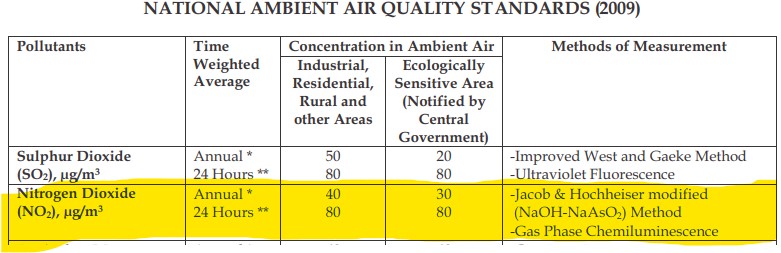
In India CPCB has set the norms for Nitrogen Dioxide(NO₂) exposure limits that are as follows:
How do I evaluate the exposure to nitrogen
According to the New Jersey Department of Health and Senior Services fact sheet to evaluate exposure to nitrogen dioxide (NO2), here are some answers to the following questions:
- How hazardous is the substance?
- How much of the substance is released into the workplace?
- Whether harmful skin or eye contact could occur?
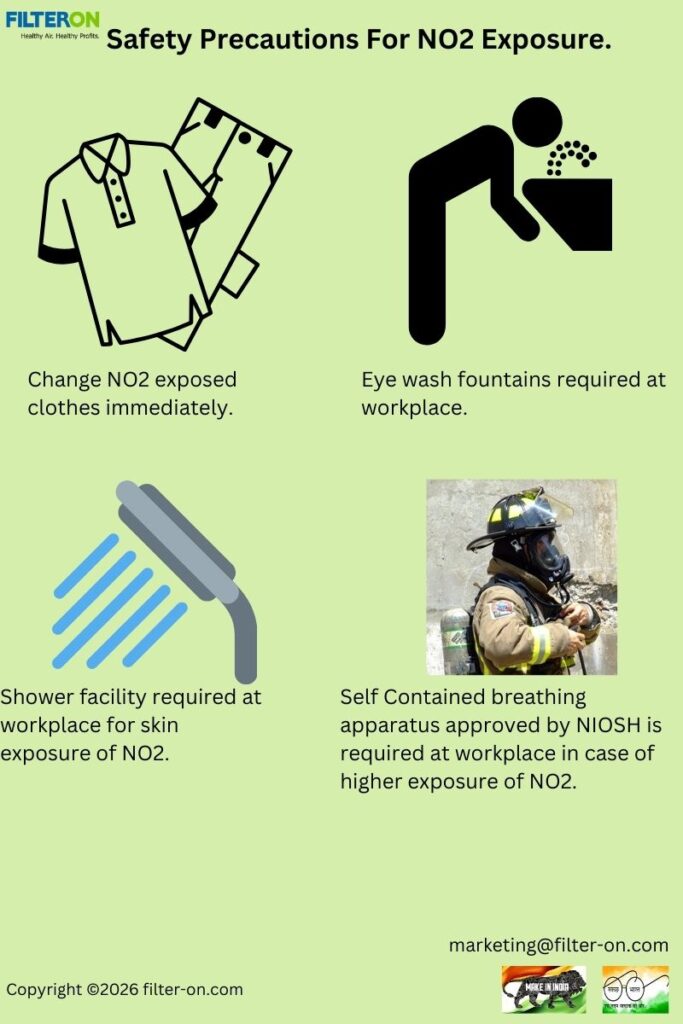
Safety Precautions for Nitrogen Dioxide (NO₂) Exposure:
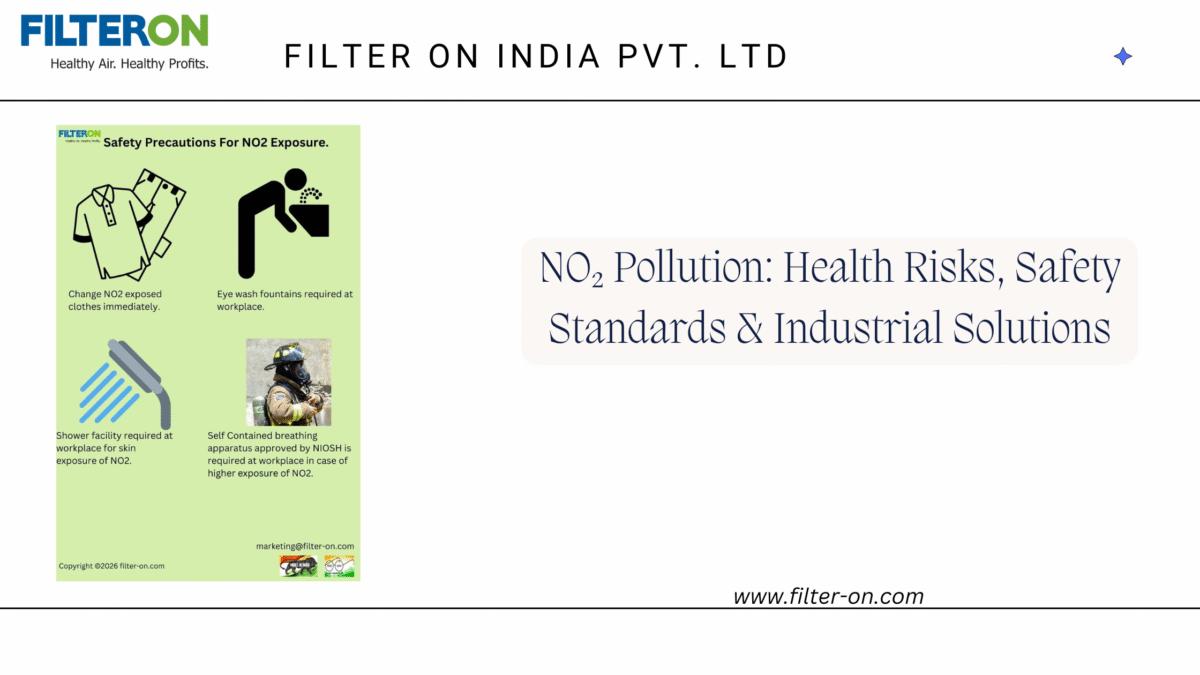
- Change the NO₂-exposed clothes immediately.
- Eye wash fountains are required at the workplace for emergency use.
- If skin exposure happens, then emergency shower facilities should be provided.
- In an emergency, if the exposure limit is 20 PPM or higher, then you must use strong self-breathing apparatus approved by NIOSH with a full face piece.
Solutions for Nitrogen Dioxide (NO₂ Pollution) Exposure in Industries:
Nitrogen dioxide is harmful for industrial workers, especially welders, so industries need to take care and implement solutions to control exposure to nitrogen dioxide. The following solutions must be implemented:
Using extraction solutions:
Using extraction solutions like Filter on Welding Fumes Extraction Solutions will be very effective for reducing nitrogen dioxide (NO₂) exposure due to welding fumes. This reduces the concentration in the breathing zone of the welder effectively.
Using ventilation solutions:
Using ventilation solutions can reduce nitrogen dioxide (NO₂) exposure to some extent, so for the safety of welders, companies must take the necessary precautions for ventilation at the workplace. The ventilation facilities have to be arranged in such a way that the welders work in the supply air stream. Ventilation systems like local exhaust ventilation (LEV) are an effective solution in such scenarios.
Using personal protective equipment:
If the room ventilation is not adequate in particularly confined spaces, then suitable breathing masks have to be worn. These should be independent from the atmosphere, such as, for example, fresh-air breathing apparatus. Welding helmets with a compressed air supply may also be necessary in confined spaces.
Other Solutions:
Companies should pay attention to certain procedural and workplace-specific factors to ensure that nitrous gasses are released in quantities that are as low as possible. These include, among others:
- Always use smaller burner sizes and flame lengths.
- Avoiding free-burning flames or
- Always maintain a small distance between the burner and the workpiece.
- Always use low-NOx burners in boilers.
- Please set policies that reduce the use of diesel transportation.
- Try to switch diesel fuel-burning vehicles to electric vehicles.
- Encourage public transport, biking, and walking.