Categories
Blogs

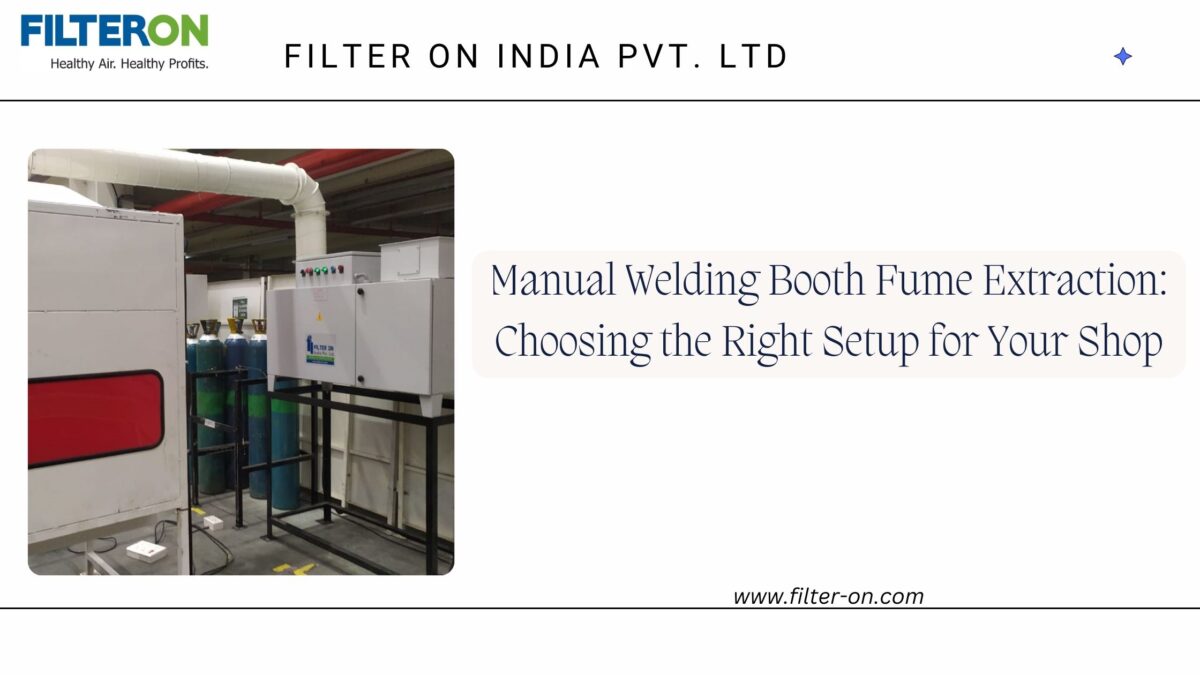
Manual Welding Booth Fume Extraction: Choosing the Right Setup for Your Shop

Manual Welding Booth Fume Extraction: Choosing the Right Setup for Your Shop

Manual welding is an integral part of almost every manufacturing setup. Unlike robotic welding, which requires a higher investment and budget, manual welding is cost-effective and fits well within most operational budgets. That is why manual welding stations are present in nearly every manufacturing facility. However, an important question remains: what is the status of fume extraction at these manual welding stations?

Large organizations generally have the capability to install fume extraction systems for both manual and robotic welding stations unlike the small ones. In this article, we will cover Manual Welding Booth Fume Extraction in detail and discuss the right setup strategy for your welding shop.

Introduction to Manual Welding Fume Extraction

Manual welding includes various welding processes such as MIG welding, Stick welding, TIG welding, Plasma Arc welding, Electron Beam welding, and Laser welding. Each of these welding types generates fumes with different characteristics and therefore requires a suitable fume extraction system based on the welding process and several operational parameters. These parameters will be discussed one by one, starting with the potential dangers associated with manual welding.

Potential Dangers Due to Manual Welding

The risks associated with manual welding can be broadly categorized into immediate hazards and long-term health consequences, as outlined below.

Immediate Physical Dangers to workers:

  • Risk of getting electric shock: One of the most serious and immediate risks. Contact with live components, such as the electrode holder, can result in severe injury or fatal electrocution, especially in damp or wet conditions.
  • Skin burns: Welding temperatures can exceed 10,000°F, causing instant burns from arc contact, molten metal spatter, or hot workpieces.
  • Fire and Explosions: Sparks and hot spatter can travel up to 35 feet, easily igniting flammable materials, gas cylinders, or residues inside used containers such as drums.
  • Eye Injuries: “Arc eye” or welder’s flash is a painful corneal burn caused by ultraviolet radiation and can occur within seconds. Intense infrared radiation may also lead to immediate retinal damage.

Health Risks from Manual Welding Fumes

Manual welding produces a complex mixture of toxic metal particles and hazardous gases.

  • Respiratory Illness: Short-term exposure can cause metal fume fever, throat irritation, and breathing discomfort. Long-term exposure is linked to lung cancer, kidney cancer, and chronic obstructive pulmonary disease (COPD).
  • Neurological Damage: Inhalation of manganese fumes, commonly generated during mild steel welding, can cause irreversible nervous system damage and symptoms similar to Parkinson’s disease.
  • Suffocation: In confined spaces, shielding gases such as argon or helium can displace oxygen, leading to rapid unconsciousness or even death.

Long-Term Hazards

  • Radiation Exposure: Prolonged exposure to ultraviolet radiation increases the risk of skin cancer and ocular melanoma.
  • Hearing Loss: Noise from welding, grinding, and cutting operations often exceeds 85–100 decibels, which can result in permanent hearing damage over time.
  • Muscle or Joint Pains: Repetitive movements and sustained awkward postures can lead to chronic back, shoulder, and neck pain.

2025 Safety Standards

  • Mandatory Controls: Regulatory authorities such as HSE, CPCB, EPA, and OSHA state that welding operations should not be carried out without appropriate fume extraction or respiratory protection, regardless of job duration.
  • Strict Exposure Limits: As of 2025, several regions have reduced workplace exposure limits for welding fumes, including aluminum fumes, to improve worker safety.
Manual Welding Booth Fume Extraction: Choosing the Right Setup for Your Shop

Manual Welding Fume Extraction: What It Is and How It Works

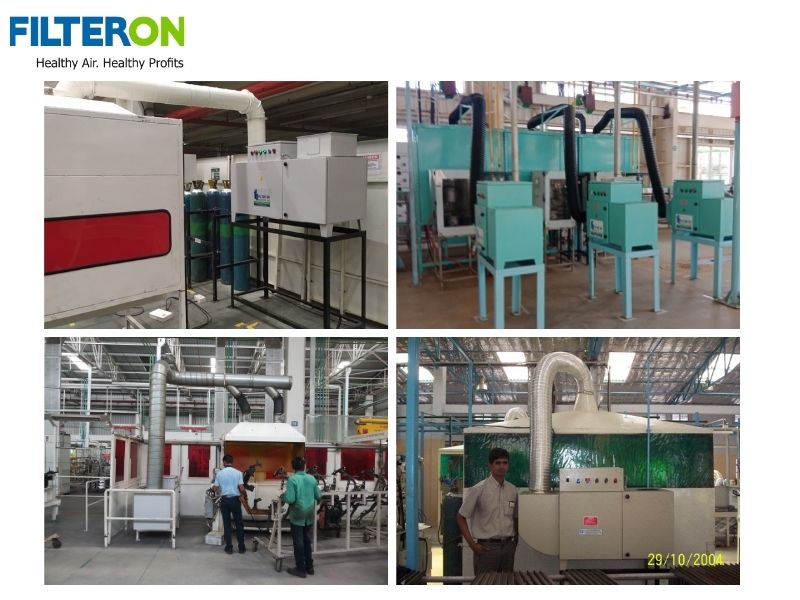
The working principle of a manual welding fume extraction system involves capturing fumes directly at the source. A hood is installed above or beside the welding station and connected to the fume extractor through ducting. Welding fumes are drawn through the hood and ducts into the filtration unit, where fine particulate matter is captured. Clean air is then discharged through the extractor fan back into the workplace or outside, depending on the system design.

A properly engineered fume extraction system is essential to capture hazardous fumes directly at the source before they disperse into the work environment.
Equipment such as a fume collector, fume extractor, or fumes extractor plays a key role in improving workplace safety and ensuring compliance with occupational health standards.
For applications involving gaseous pollutants, a fume scrubber system is commonly used to neutralize harmful vapors before air is released or recirculated.

Welding fume extraction solutions for Manual Welding Booths:

Welding operations generate toxic metal fumes that require effective source capture. A dedicated fume extractor for welding or fume extractor welding setup helps control exposure in manual and automated welding stations.

A complete welding fume extraction system or welding exhaust system is designed based on welding type, enclosure conditions, and duty cycle.

Proper welding fume exhaust not only improves air quality but also supports regulatory compliance, while system selection from certified welding fume extractor manufacturers ensures reliability and long-term performance.

The welding fume extractor price typically depends on airflow capacity, filtration efficiency, and system configuration.

Factors to Consider for Manual Welding Fume Extraction

When selecting a manual welding fume extraction system, several important factors must be considered.

  • Number of Manual Welding Stations:  The number of manual welding stations plays a key role in determining the size and capacity of the fume extraction system. It directly impacts the total airflow requirement and the coverage area of the system.
  • Type of Welding & Manual  welding  fume extraction: Each welding process ARC, MIG, or TIG requires a fume extraction system designed according to its specific fume generation pattern and operational characteristics.
  • Size of Welding Fixture or Table (L × W × H):  The dimensions of the welding table or fixture are essential for calculating the required airflow capacity (CMH) of the fume extraction system.
  • Enclosure Details: The level of enclosure around the welding booth whether fully enclosed, partially enclosed, or open directly affects fume capture efficiency and exposure levels.
  • Material Handling System: The type of material handling system used, such as manual handling, automated systems, or EOT cranes, influences the placement and configuration of the fume extraction system.
  • Welding Cycle Time:; The actual duration of welding operations determines overall fume exposure and helps define the required extraction capacity.
  • Layout Availability: If a detailed layout is available, it becomes easier to plan optimal placement of the fume extractor and ducting. Proper layout planning ensures effective fume control without obstructing worker movement or compromising safety.
Frequently Asked Questions (FAQs)

Is fume extraction mandatory for manual welding?
Yes. Safety authorities such as OSHA, HSE, CPCB, and EPA mandate the use of appropriate fume extraction or respiratory controls during manual welding to reduce exposure to hazardous fumes and protect worker health.

Which fume extraction system is best for manual welding booths?
The ideal system depends on factors such as the welding process, number of welding stations, enclosure design, and airflow requirements. Common solutions include extraction arms, welding hoods, and downdraft tables that capture fumes directly at the source.

Are welding fumes harmful during short welding operations?
Yes. Even short-term exposure can cause metal fume fever, respiratory irritation, and eye discomfort. Repeated exposure without proper fume control can result in serious long-term health issues.

Can one fume extractor serve multiple manual welding stations?

Yes. A centralized fume extraction system can serve multiple manual welding stations if it is properly designed with adequate airflow capacity, balanced ducting, and effective fume capture at each station.

Visit  blogs to learn more about the critical features of clean air system design and air pollution control systems created by Filter On India.
Filter On India has been working towards “Mission Zero Pollution” for the last 40+ years as a clean air solutions partner for industries. We specialize and have expertise in welding fumes, oil mist, coolant mist, dust collection, soldering, laser marking, laser cutting, plasma cutting, fumes in fastener manufacturing, ball point tip manufacturing, oil quenching, kitchen fumes, etc. Filter On has 70+ clean air solutions, so you can contact us for more information about our solutions. You can reach us through the web or visit us at our corporate office at Pune, or mail us at : marketing@filter-on.com

Facebook
Twitter
LinkedIn
Categories
Blogs

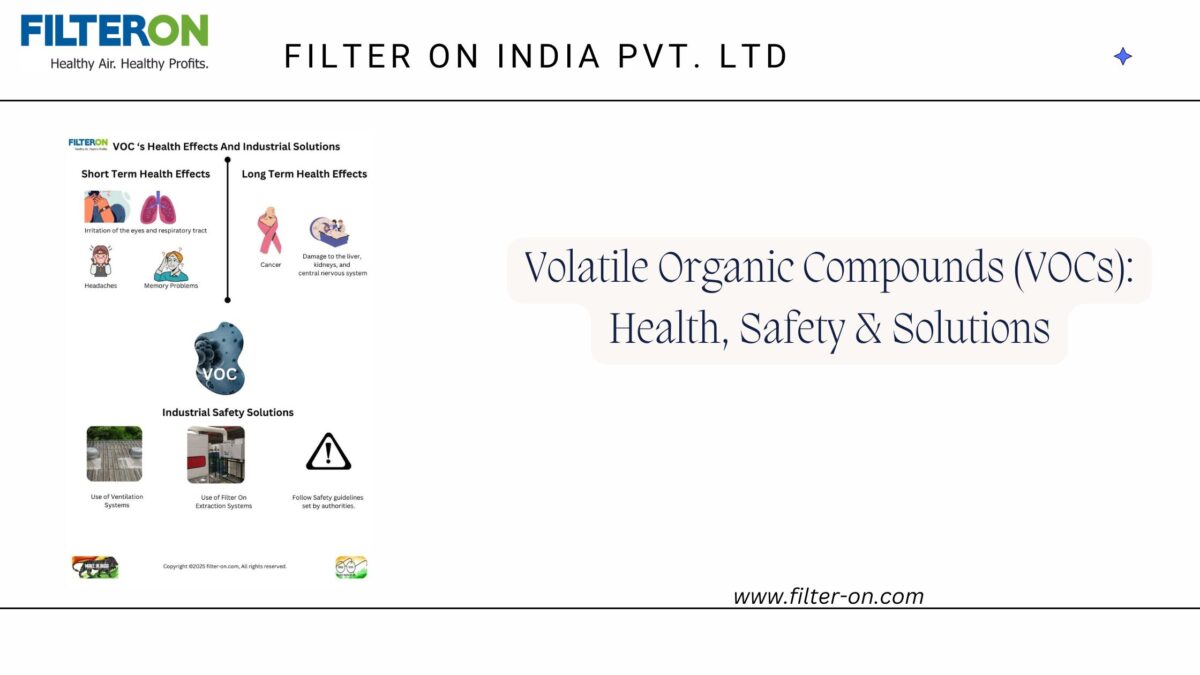
Volatile Organic Compounds (VOCs): Health, Safety & Solutions

Clearing the Air: Understanding Volatile Organic Compounds (VOCs) – Examining Pollution, Health Impacts, Safety Limits, and Industrial Solutions for Risk Mitigation

When we think about pollution, we have thoughts about its various sources and main pollutants, such as transportation, industrial pollution, CO2, SO2, and volatile organic compounds (VOCs). VOCs are small organic compounds that are present in the air and play a vital part in air pollution. We are here to discuss the VOC, its impact on health, safety limits, and solutions to restrict the risks associated with VOCs.

What are VOCs?

Volatile organic compounds (VOCs) are a group of chemicals that highly vaporize into the air. Chemicals like benzene, ethylene glycol, methylene chloride, tetrachloroethylene, toluene, xylene, and 1,3-butadiene. These VOCs are themselves harmful, and some of them combine and form other pollutants as well.

Common products where VOCs are mostly present:

  • Paints, paint strippers, and other solvents
  • Wood preservatives
  • Aerosol sprays
  • Cleansers and disinfectants
  • Moth repellents and air fresheners
  • Stored fuels and automotive products
  • Hobby supplies
  • Dry-cleaned clothing

VOCs as pollutants:

Volatile organic compounds (VOCs) are a group of pollutants that are responsible for air pollution. Some of the sources of VOCs are as follows:

Volatile Organic Compounds (VOCs): Health, Safety & Solutions

Natural Sources-

Volatile organic compounds Natural sources are as follows:

  • Plants: Many plants release harmful chemicals, and some can even absorb them.
  • Forest fires: Natural forest fires are a source of VOCs.
  • Anaerobic moors: Anaerobic moors processes are a source of VOCs.
  • Cattle farms: Cow manure is a volatile source of methane, a potent greenhouse gas.
  • Anything burning: Anything that burns can be a source of VOCs.

Some of the other natural sources include volcanoes and fermentations.

Artificial Sources-

Artificial, man Made sources of VOCs include fuel production, distribution, and combustion, with the largest source being emissions from motor vehicles due to either evaporation or incomplete combustion of fuel and from biomass burning.

Volatile organic compounds (VOCs) are industrial solvents, fuel oxygenates, and by-products from water treatment. They are often found in petroleum fuels, hydraulic fluids, paint thinners, and dry cleaning agents.

VOCs can come from industrial sources such as:

  • Burning fossil fuels
  • Power generation
  • Manufacturing chemicals
  • Crude oil processing
  • Some metal production processes

Other sources of VOCs include:

  • Gasoline, fuels, and solvents
  • Paints, stains, strippers, and finishes
  • Pesticides
  • Personal care products
  • Aerosol sprays
  • Cleaners and room deodorizers
  • New cabinets, furniture, and beds
  • New carpets, rugs, and wood floors

According to Energy Education, a major contributor to VOCs is the evaporation of hydrocarbon-rich liquids. These include:

  • Gasoline from car tanks or refueling stations
  • Industrial solvents such as oil-based paint
  • Barbecue starter fluid
  • Cleaning products

Health Effects of Volatile Organic Compounds (VOCs)

The health effects of VOCs are as follows:

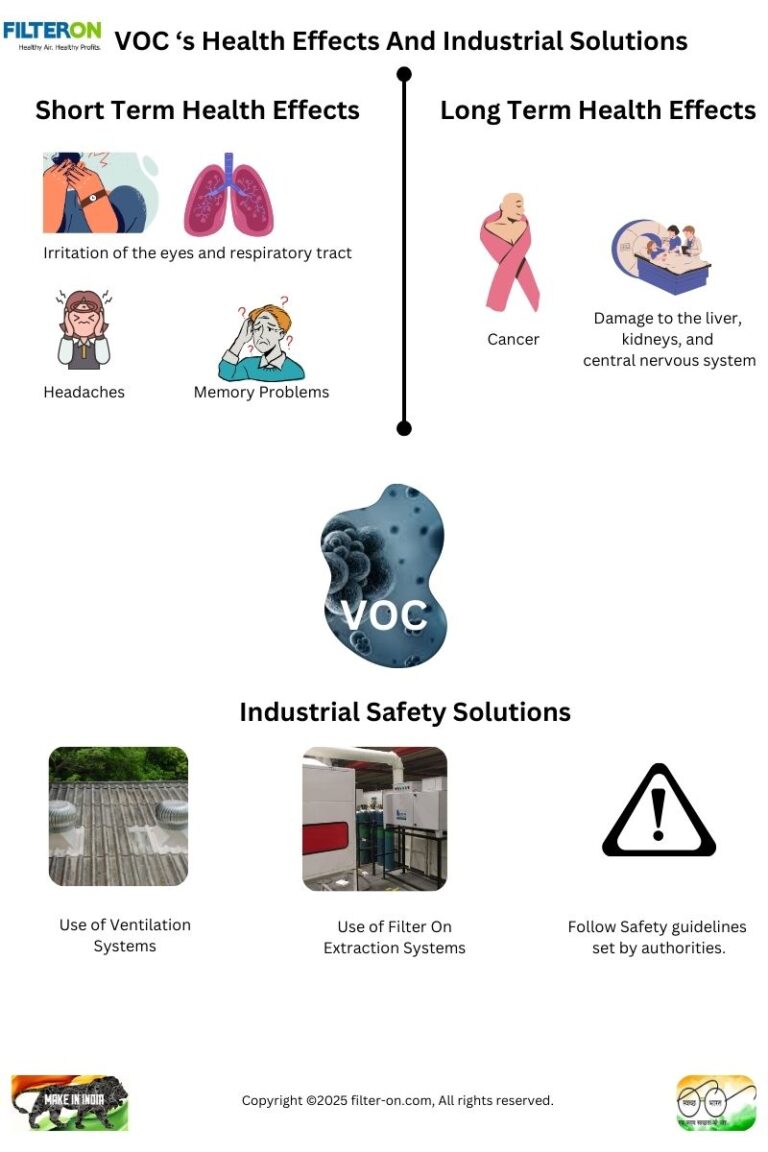
The health effects of VOCs on industrial workers and general people are categorized by short-term exposure and long-term exposure limits. Short-term exposure effects on health are immediate, and they have been for short periods of time, may be a few hours or a few days, whereas long-term health effects can be long-term exposure, may be a few years, to permanent effects on health. Both are categorized as under.

Short-term:
Short-term exposure to various VOCs may cause:

  • Irritation of the eyes and respiratory tract
  • Headaches
  • Dizziness
  • Visual disorders
  • Memory problems

Long-term:
Long-term exposure to various VOCs may cause:

  • Irritation of the eyes, nose, and throat
  • Nausea
  • Fatigue
  • Loss of coordination
  • Dizziness
  • Damage to the liver, kidneys, and central nervous system
  • Cancer

Industrial Safety Limits for VOCs

Safety Guidelines for Industries by CPCB With respect to VOC exposure

The industries can look more closely at the following aspects for the control of VOCs:

  • Closed handling system for chemicals.
  • Improved solvent recovery through the use of some special condensers and subcooling systems.
  • Mechanical seal for chemical handling pumps.
  • LDAR system – Venting of storages with trap receiver and condenser.
  • Training for the laborers and staff.
  • Proper system of loading and unloading of solvents.
  • Proper solvent recovery systems.
  • Work environment monitoring with respect to VOC has to be conducted and compared with the Factories Act’s occupational health standards.
  • All the emissions emitting sources are to be channeled through ducts to a common conduit, and after advanced condensers and/or scrubbing with relevant or proper scrubbing, the treated emissions are to be let into the air.

Solutions for VOC exposure in industrial environments:

Solutions for VOC exposure in industries are as follows:

Proper Ventilation Measures:

Proper ventilation measures, such as LEV (local exhaust ventilation), must be installed in high-exposure areas of industries for worker safety.

Use of Extraction Systems:

Using extraction systems like Filter On India’s Clean Air Solutions in welding fumes solutions, oil mist extraction and dust collection solutions like welding fumes extractors, oil mist collectors, dust collectors, downdraft tables, and ESP filtration systems with HEPA must be used to control VOC exposure in industrial environments.

Follow guidelines set by authorities.

With regards to worker safety, industries must follow guidelines set by different authorities, such as OSHA, EPA, and CPCB, to control VOC exposure in industries.

Industrial safety limits for VOCs are provided by OSHA,EPA, ACGIH, and in the Indian context, CPCB.

As per OSHA, ACGIH, and NIOSH, the permissible exposure limits for VOCs are as follows-

Exposure Limits
OSHA (PEL)for general industry: 50 ppm (240 mg/m3) TWA; Skin for the Construction Industry: 50 ppm (240 mg/m2) TWA; Skin for Maritime: 50 ppm (240 mg/m2) TWA; Skin
ACGIH (TLV)20 ppm; Appendix A3: Confirmed Animal Carcinogens with Unknown Relevance to Humans
NIOSH (REL)5 ppm (24 mg/m2) TWA
NIOSH (IDHL)700 ppm

The OSHA standards for VOCs can be read here.

Another example of regulations relating to VOC safety includes the EPA’s regulation 40 CFR 59. This federal regulation, “National Volatile Organic Compound Emission Standards for Consumer and Commercial Products,” targets overseas manufacturers and importers of certain products and seeks to ensure that such parties remain in compliance with VOC emission standards.

In the Indian context, the CPCB (Central Pollution Control Board) has set the permissible exposure limits for pollutants, so for VOCs, its limits are as follows:

Moreover, there is no legislation for VOC in ambient air in India. As per the National Ambient Air Quality Standard (NAAQS) of India, benzene is the only VOC whose standard has been prescribed as 5 μg/m3 since November 2009.

Visit  blogs to learn more about the critical features of clean air system design and air pollution control systems created by Filter On India.

Filter On India has been working towards “Mission Zero Pollution” for the last 40+ years as a clean air solutions partner for industries. We specialize and have expertise in welding fumes, oil mist, coolant mist, dust collection, soldering, laser marking, laser cutting, plasma cutting, fumes in fastener manufacturing, ball point tip manufacturing, oil quenching, kitchen fumes, etc. Filter On has 70+ clean air solutions, so you can contact us for more information about our solutions. You can reach us through the web or visit us at our corporate office at Pune, or mail us at : marketing@filter-on.com

Facebook
Twitter
LinkedIn