

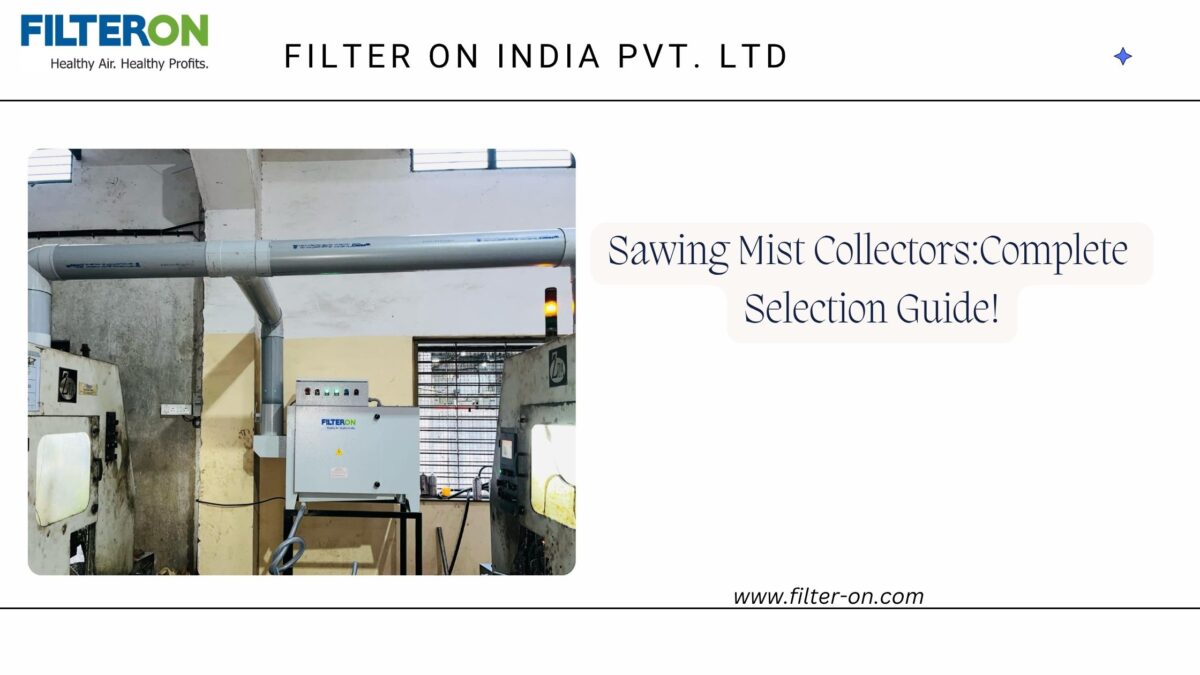
Sawing mist collectors are used to control mist exposures generated by circular sawing machines, which use oil as coolant. The mist generated from sawing operations is harmful to workers; it may contain oil particles such as PM2.5 & PM10. If they inhale these, they will suffer various health issues, such as respiratory issues, skin irritation, and carcinogenic exposure. There are also some environmental and safety issues, such as slippery floors, equipment damage, and poor air quality. In this article, we will discuss solutions to these issues, including oil mist collectors, the parameters for selecting them, and their benefits. Let’s first discuss the health issues.
Sawing Mist Health Issues:
Exposure to sawing machine mist poses significant risks to workers, as they are in direct contact with it during long working hours. Understanding the health effects is crucial for making informed decisions about installing an sawing mist collectors in the workspace. The health issues associated with this exposure include the following:
Respiratory Issues:
Respiratory problems resulting from prolonged work exposure lead to workers inhaling fine mists. This exposure frequently results in symptoms such as coughing, dry throat, and sensations of tightness in the chest and throat. Over time, these effects can contribute to the development of more serious conditions, including asthma and chronic bronchitis.
Skin Irritation:
Workers directly contact cutting fluids, which results in dry skin, rashes, and contact dermatitis.
Carcinogenic Exposure:
Workers are directly exposed to harmful oil mist, which leads to, firstly, respiratory issues, and maybe if anyone has more exposure, he/she can suffer from cancer.
All these health issues due to harmful oil mist are problematic in the long run, which deteriorates the goodwill of the organization, so taking necessary steps to control this exposure is essential for any organization in a long-term context.
Environmental & Safety Hazards:
There are a few environmental and safety hazards such as poor air quality, slippery floors, and mist buildup.
Poor air quality:
High exposure to oil mist creates a visible oily haze and unpleasant odors in closed or small spaces, which deteriorates the air quality in the workplace.
Slippery Floors:
Oil mist generated by sawing machines can make floors slippery due to its oily particles, which leads to exposing employees to slippery health hazards.
Equipment mist buildup:
Mist buildup attracts dust and lint, resulting in gunk accumulation on tools and parts. This phenomenon leads to increased maintenance over time, emphasizing the importance of addressing mist buildup to ensure efficient operations and long-term savings.
Fine oil mist generated during sawing operations can remain suspended in the workplace air. Prolonged exposure to certain oil mists may present occupational health concerns. For more information on mineral oil mist, exposure monitoring, and occupational exposure limits, refer to the OSHA guidelines on mineral oil mist.
Minimum Quantity Lubrication (MQL): In Sawing
Most of the sawing applications use an MQL-type lubrication system due to certain advantages.
The minimum quantity lubrication (MQL) system delivers a small amount of oil to the saw blade tip using compressed air. Tiny fluid usage: Instead of gallons of liquid coolant, it uses drops of oil (like 20 ml per hour).
Some of the advantages of the MQL system for sawing are:
Direct targeting: Blasts a fine mix of air and oil directly where the saw teeth touch the metal.
Dry chips: Makes metal chips completely dry so they are simple to recycle and worth more money.
Longer blade life: Avoids heat shock to the saw teeth, keeping the blade sharp for a longer time.
With these advantages, however, MQL generates very fine mist, which can spread all over if not controlled well. ESP-type mist collectors are found to be the most effective solution for controlling mist.
How Electrostatic Precipitation Helps in Minimum Quantity Lubrication In Sawing:
An electrostatic precipitator (ESP) is an air filter that removes any fine oil smoke or particle mist that is generated during the high-speed metal cutting process of sawing.
How it works and what its advantages:
Electrical charging: Gives an electrical charge to small, floating oil smoke particles in the air.
Magnetic collection: Draws charged oil bits to opposite metal plates within the filter.
Clean air output: Blows clean air back in to the shop room instead of spreading in the work environment.
Easy Maintenance: ESP filters are washable in nature, so workers can easily clean them using our special type of degreaser, just like new in condition. Periodic maintenance keeps this ESP-based system working perfectly fine for the long run.
MQL with ESP filtration solutions works and complements well, and it effectively removes the oil mist from the sawing operation.
Parameters for Sawing Mist Collector Selection:
Selecting an sawing mist collectors requires evaluating airflow volume (CFM/CMH), coolant type (oil-based or synthetic), filtration efficiency, and enclosure capture design. These parameters play a vital role in selecting the best sawing mist collectors.
Airflow and Sizing Parameters:
- Enclosure Volume: To determine the correct enclosure volume, or the appropriate size of the mist collector, multiply the dimensions of the internal cutting area by the required air change rate. This rate typically ranges from 4 to 10 air changes per minute for standard enclosures, which will help identify the necessary size for the mist collector.
- Capture Velocity: To capture velocity correctly, maintain a minimum face velocity at open access points or hoods to pull stray droplets away from the saw blade.
- Ductwork and Bends: To maintain the required airflow, add equivalent straight-pipe lengths for bends and transitions to avoid static pressure drops that reduce suction performance.
Fluid and Particle Characteristics
- Coolant Composition: Pure neat oil generates smaller, more persistent aerosols that necessitate high-efficiency filters or electrostatic precipitators. In contrast, water-soluble coolants may require centrifugal or media filters.
- Particle Size: Fine sub-micron smoke and dry particulate from high-speed sawing need electrostatic precipitation or HEPA or multi-stage media configurations, as per OSHA and CPCB guidelines.
Operational and Physical Constraints
- Noise Level: Please select units operating under 65–80 dBA to comply with safe workshop sound limits.
- Footprint and Mounting: To make mounting easier, choose machine-mounted, floor-standing, or overhead units depending on the floor space around your band or circular saw.
- Maintenance Frequency: Maintenance frequency is an important parameter as a factor in how easily drainage, filter washing, or core replacements can be performed to minimize production downtime.
Frequently Asked Questions:
1. What health issues can be caused by mist from sawing machines?
Ans: Fine oil and coolant mist can remain suspended in the air and may cause eye, skin, or respiratory irritation with prolonged exposure. A suitable mist collector helps capture airborne mist at the source and supports a cleaner workplace.
2. Why is a mist collector important for health and safety?
Ans: A mist collector reduces airborne oil and coolant mist, helping maintain cleaner air, cleaner machinery, and safer working areas. It can also reduce oil deposits and slippery surfaces around the machine.
3. What parameters should be considered when selecting a sawing mist collector?
Ans: Key parameters include machine make and model, enclosure size, material being cut, workpiece diameter, oil pressure, coolant type and flow rate, blade speed, operating hours, and machine layout.
4. How are airflow and filtration requirements determined?
Ans: The required airflow depends on factors such as enclosure volume, air changes, capture velocity, and ductwork pressure losses. Coolant type and particle size also influence the filtration technology, while noise, mounting space, drainage, and maintenance access should be considered for practical installation.