Categories
Blogs

Sawing Mist Collectors: Complete Selection Guide

Sawing Mist Collectors: Complete Selection Guide!

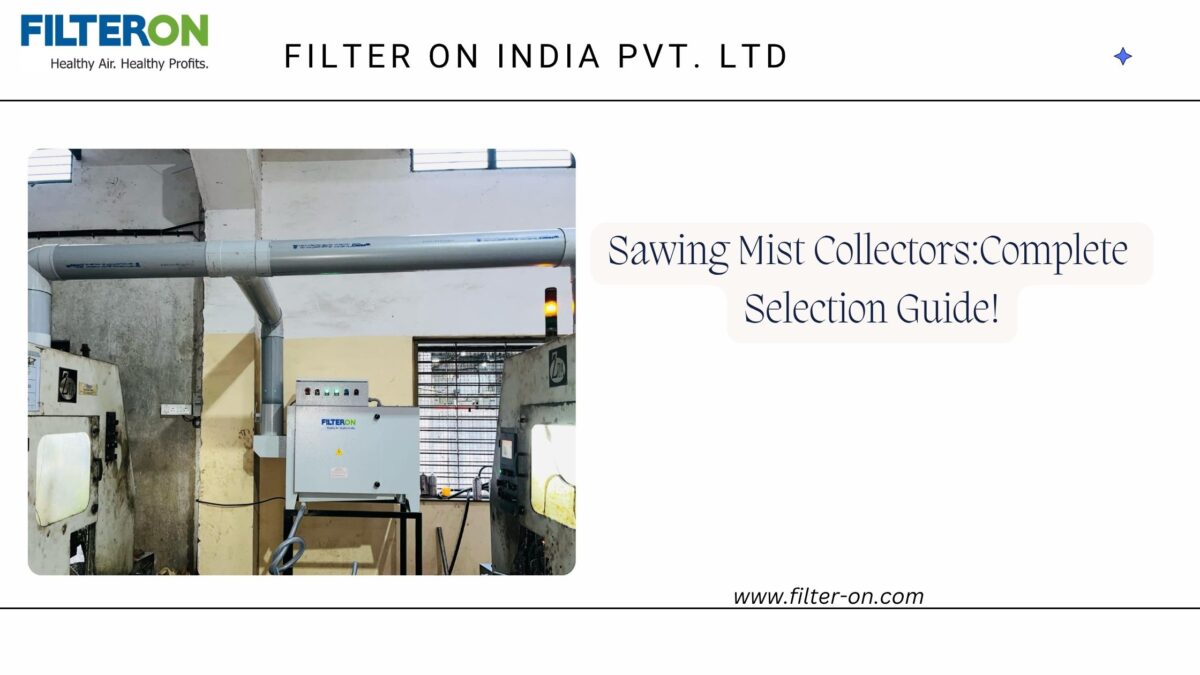
Sawing mist collectors are used to control mist exposures generated by circular sawing machines, which use oil as coolant. The mist generated from sawing operations is harmful to workers; it may contain oil particles such as PM2.5 & PM10. If they inhale these, they will suffer various health issues, such as respiratory issues, skin irritation, and carcinogenic exposure. There are also some environmental and safety issues, such as slippery floors, equipment damage, and poor air quality. In this article, we will discuss solutions to these issues, including oil mist collectors, the parameters for selecting them, and their benefits. Let’s first discuss the health issues.

Sawing Mist Health Issues:

Exposure to sawing machine mist poses significant risks to workers, as they are in direct contact with it during long working hours. Understanding the health effects is crucial for making informed decisions about installing an sawing mist collectors in the workspace. The health issues associated with this exposure include the following:

Respiratory Issues:

Respiratory problems resulting from prolonged work exposure lead to workers inhaling fine mists. This exposure frequently results in symptoms such as coughing, dry throat, and sensations of tightness in the chest and throat. Over time, these effects can contribute to the development of more serious conditions, including asthma and chronic bronchitis.

Skin Irritation:

Workers directly contact cutting fluids, which results in dry skin, rashes, and contact dermatitis.

Carcinogenic Exposure:

Workers are directly exposed to harmful oil mist, which leads to, firstly, respiratory issues, and maybe if anyone has more exposure, he/she can suffer from cancer.

All these health issues due to harmful oil mist are problematic in the long run, which deteriorates the goodwill of the organization, so taking necessary steps to control this exposure is essential for any organization in a long-term context.

Environmental & Safety Hazards:

There are a few environmental and safety hazards such as poor air quality, slippery floors, and mist buildup. 

Poor air quality:

High exposure to oil mist creates a visible oily haze and unpleasant odors in closed or small spaces, which deteriorates the air quality in the workplace.

Slippery Floors:

Oil mist generated by sawing machines can make floors slippery due to its oily particles, which leads to exposing employees to slippery health hazards.

Equipment mist buildup:

Mist buildup attracts dust and lint, resulting in gunk accumulation on tools and parts. This phenomenon leads to increased maintenance over time, emphasizing the importance of addressing mist buildup to ensure efficient operations and long-term savings.

Fine oil mist generated during sawing operations can remain suspended in the workplace air. Prolonged exposure to certain oil mists may present occupational health concerns. For more information on mineral oil mist, exposure monitoring, and occupational exposure limits, refer to the OSHA guidelines on mineral oil mist.

Minimum Quantity Lubrication (MQL): In Sawing 

Most of the sawing applications use an MQL-type lubrication system due to certain advantages. 

The minimum quantity lubrication (MQL) system delivers a small amount of oil to the saw blade tip using compressed air. Tiny fluid usage: Instead of gallons of liquid coolant, it uses drops of oil (like 20 ml per hour).

Some of the advantages of the MQL system for sawing are:

Direct targeting: Blasts a fine mix of air and oil directly where the saw teeth touch the metal.

Dry chips: Makes metal chips completely dry so they are simple to recycle and worth more money.

Longer blade life: Avoids heat shock to the saw teeth, keeping the blade sharp for a longer time.

With these advantages, however, MQL generates very fine mist, which can spread all over if not controlled well. ESP-type mist collectors are found to be the most effective solution for controlling mist.

How Electrostatic Precipitation Helps in Minimum Quantity Lubrication In Sawing:

An electrostatic precipitator (ESP) is an air filter that removes any fine oil smoke or particle mist that is generated during the high-speed metal cutting process of sawing.

How it works and what its advantages:

Electrical charging: Gives an electrical charge to small, floating oil smoke particles in the air.

Magnetic collection: Draws charged oil bits to opposite metal plates within the filter.

Clean air output: Blows clean air back in to the shop room instead of spreading in the work environment.

Easy Maintenance: ESP filters are washable in nature, so workers can easily clean them using our special type of degreaser, just like new in condition. Periodic maintenance keeps this ESP-based system working perfectly fine for the long run.

MQL with ESP filtration solutions works and complements well, and it effectively removes the oil mist from the sawing operation.

Parameters for Sawing Mist Collector Selection:

Selecting an sawing mist collectors requires evaluating airflow volume (CFM/CMH), coolant type (oil-based or synthetic), filtration efficiency, and enclosure capture design. These parameters play a vital role in selecting the best sawing mist collectors. 

Airflow and Sizing Parameters:

  • Enclosure Volume: To determine the correct enclosure volume, or the appropriate size of the mist collector, multiply the dimensions of the internal cutting area by the required air change rate. This rate typically ranges from 4 to 10 air changes per minute for standard enclosures, which will help identify the necessary size for the mist collector.
  • Capture Velocity: To capture velocity correctly, maintain a minimum face velocity at open access points or hoods to pull stray droplets away from the saw blade. 
  • Ductwork and Bends: To maintain the required airflow, add equivalent straight-pipe lengths for bends and transitions to avoid static pressure drops that reduce suction performance.

Fluid and Particle Characteristics

  • Coolant Composition: Pure neat oil generates smaller, more persistent aerosols that necessitate high-efficiency filters or electrostatic precipitators. In contrast, water-soluble coolants may require centrifugal or media filters.
  • Particle Size: Fine sub-micron smoke and dry particulate from high-speed sawing need electrostatic precipitation or HEPA or multi-stage media configurations, as per OSHA and CPCB guidelines.

Operational and Physical Constraints

  • Noise Level: Please select units operating under 65–80 dBA to comply with safe workshop sound limits. 
  • Footprint and Mounting: To make mounting easier, choose machine-mounted, floor-standing, or overhead units depending on the floor space around your band or circular saw. 
  • Maintenance Frequency: Maintenance frequency is an important parameter as a factor in how easily drainage, filter washing, or core replacements can be performed to minimize production downtime.
If your Sawing  machines operate without proper oil mist control, efficiency is being lost daily. Evaluate your setup or consult an expert like Filter ON India  to select the right system as per requirement, budget and scope. Contact us to learn more….

Frequently Asked Questions:

1. What health issues can be caused by mist from sawing machines?

Ans: Fine oil and coolant mist can remain suspended in the air and may cause eye, skin, or respiratory irritation with prolonged exposure. A suitable mist collector helps capture airborne mist at the source and supports a cleaner workplace.

Ans: A mist collector reduces airborne oil and coolant mist, helping maintain cleaner air, cleaner machinery, and safer working areas. It can also reduce oil deposits and slippery surfaces around the machine.

Ans: Key parameters include machine make and model, enclosure size, material being cut, workpiece diameter, oil pressure, coolant type and flow rate, blade speed, operating hours, and machine layout.

Ans: The required airflow depends on factors such as enclosure volume, air changes, capture velocity, and ductwork pressure losses. Coolant type and particle size also influence the filtration technology, while noise, mounting space, drainage, and maintenance access should be considered for practical installation.
Visit  blogs to learn more about the critical features of clean air system design and air pollution control systems created by Filter On India.

Filter On India has been working towards “Mission Zero Pollution” for the last 40+ years as a clean air solutions partner for industries. We specialize and have expertise in welding fumes, oil mist, coolant mist, dust collection, soldering, laser marking, laser cutting, plasma cutting, fumes in fastener manufacturing, ball point tip manufacturing, oil quenching, kitchen fumes, etc. Filter On has 70+ clean air solutions, so you can contact us for more information about our solutions. You can reach us through the web or visit us at our corporate office at Pune, or mail us at : marketing@filter-on.com

Facebook
Twitter
LinkedIn
Categories
Blogs

Sliding Head Mist Collectors: Complete Selection Guide

Sliding Head Mist Collectors: Complete Selection Guide!

Oil mist collectors for sliding-head machines precisely control sliding-head mist and fumes. These fumes are very hazardous to health, as these fumes can impact workers and make the work environment polluted. As a result, to control fumes from sliding-head machines, oil mist collectors must have some of the key features that we will be discussing here in this blog post.

Why and What Should You Look For In Sliding Head Mist Collectors:

When we consider a sliding head mist collector for the first time, we need to look at some of the key factors, which are listed below. These reinforce your decision to purchase a right sliding head mist collector.

  • Purpose: Sliding head mist collectors are essential for extracting high-volume, sub-micron oil mists from Swiss-type CNC lathes using high-pressure neat oils.
  • Specialization: These machines require compact and efficient filters due to their operation in tight enclosures with thick, ultra-fine mist.
  • Filtration Efficiency: Look for oil mist collectors with electrostatic precipitators (ESPs) that can capture 95–99% of particles down to 0.3 to 0.5 microns, as other types of standard filters are inadequate.
  • Filter Type: Manufacturers like Filter ON provide specialized ESP filtration solutions tailored for neat oil processing in sliding head lathes.
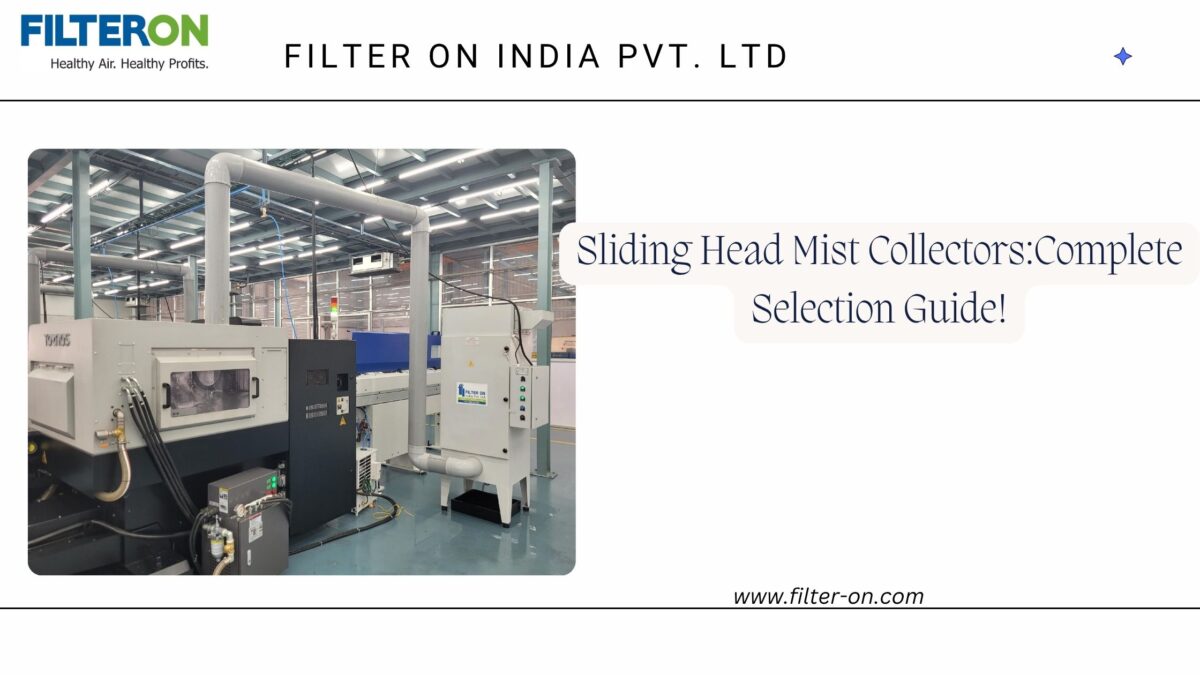
  • Mounting of sliding head mist collectors: Choose units with a compact design, able to be directly top-mounted onto machine enclosures or pillar mounted near sliding head machines, optimizing shop-floor space while maintaining high capacity (300 m³/hr to 2000 m³/hr). Combining multiple machines in a common larger size Mist Collector system also would save space.

Role of ESP in Sliding Head Mist Collectors:

Electrostatic precipitation is one of the finest technologies to capture harmful particles from sliding head machining Mist & Fumes and filter them and provide clean air back to the work environment. ESP plays a very vital role in sliding head mist collector filtration, as it has the following features:

  • Minimal Power Cost: Unlike the other technologies, ESPs work in very low power due to their innovative electrostatic technology, which uses less power while working.
  • Zero Cost on Filter Replacement: As sliding head mist collectors use ESP cells and their pre- as well as post-filters, all are washable in nature. You can use it for as long as you require by just periodic cleaning based on your usage pattern so that your replacement cost for filters is saved due to this technological advancement.
  • Minimal Pressure Drop: The significant aspect of ESP-based sliding head mist collectors is that they have a limited pressure drop, which is almost 50% less than equivalent capacity Media type filters.

Parameters to decide on a sliding head mist collector:

There are a few parameters you should consider while selecting the best sliding head mist collector, which are the following:
  • Checking the make & model: When selecting a sliding head mist collector, it is essential to check the make and model of the sliding head machine. This information helps determine the appropriate capacity for the mist collector, as different makes and models of sliding heads have unique arrangements for mist generation and discharge. Our (Filter ON’s) sliding head mist collector is compatible with the following brands of sliding head machines:
  1. Citizen
  2. Star
  3. Tornos
  4. Tsugami
  5. Rollomatic
  • Rod Diameter: In sliding head machines, rod diameter has a considerable imp act on machining processes such as cutting forces, spindle speed, coolant flow, and oil mist volume. Larger rod diameters require higher coolant flow and longer cutting cycles, resulting in more coolant and oil mist. Efficient mist collectors gather airborne mist at its source, improving air quality and safety and eliminating slippery leftovers. The ideal mist collector size is determined by coolant type, pressure, enclosure volume, spindle speed, and duty cycle. Thus, for best mist collector performance, entire machining conditions must be evaluated rather than just rod diameter.
  • Oil Pressure: When cutting oil or coolant is supplied under high pressure, it atomizes into fine droplets that create oil mist. Increased oil pressure correlates with more oil atomization, leading to greater airborne mist concentration and the potential need for more efficient mist collectors. For instance, at low pressure (5–20 bar), standard mist collectors suffice; at medium pressure (20–50 bar), higher airflow and filtration are necessary; and at high pressure (50–150+ bar), high-performance collectors are required due to the large amounts of fine mist generated. Sliding head machines utilize high-pressure cutting oil systems to enhance chip breaking, tool cooling, and dimensional accuracy, necessitating careful consideration of oil pressure alongside other factors such as oil flow rate, spindle speed, and machine enclosure size when choosing mist collectors.
  • Material Used: Common materials used in sliding head machining include stainless steel (SS), aluminum, brass, copper, titanium, carbon steel/alloy steel, and engineering plastics. Stainless steel, particularly grades like SS 303, 304, and 316, is often used for medical parts and automotive components, generating fine oil mist due to high cutting resistance. Aluminum, used in electronics and aerospace, produces significant mist at high spindle speeds. Machining brass and copper produces oil mist and fine chips, but titanium requires more oil at higher temperatures, which increases mist formation. Carbon steel and alloy steel produce moderate- to high-mists, depending on the conditions.  The choice of material influences various factors, such as oil temperature and pressure, cutting speed, and chip formation, which affect mist production. For instance, machining stainless steel with high-pressure oil results in finer, more abundant mist compared to brass at lower parameters. All of these materials significantly influence the level of mist exposure generated by sliding head machines.
  • Requirement of Layout: In the case of multiple sliding head machines installed at the plant, one can think of a centralized system for sliding head mist collection, i.e., the layout of the entire plant or the area in which sliding head machines are installed is required to optimize fume and mist generation from there to effectively capture and filter fumes and mists and provide workers with a cleaner work environment.

 If your Sliding head machines operate without proper oil mist control, efficiency is being lost daily.

Evaluate your setup or consult an expert like Filter ON India  to select the right system as per requirement, budget and scope. Contact us to learn more….

Frequently Asked Questions:

1. Why is a mist collector required for a sliding head machine?

Ans: Sliding head machines operate at high spindle speeds and often use high-pressure cutting oil or coolant. This combination produces fine oil mist that can escape into the workplace. A mist collector captures these airborne particles, improving air quality, operator safety, machine cleanliness, and overall productivity.

Ans: The ideal mist collector depends on factors such as coolant type, oil pressure, spindle speed, machine enclosure, and production hours. For machines using neat cutting oil and generating very fine submicron mist, an Electrostatic Precipitator (ESP) is often an excellent choice because of its high filtration efficiency and oil recovery capability.

Ans:Yes, provided the total airflow requirement (CFM or m³/h), duct design, and machine operating schedule are properly calculated. Centralized systems are suitable for multiple machines, while individual units provide dedicated extraction.

Ans:Yes. Many ESP-based and centrifugal mist collectors separate oil from the air stream, allowing recovered oil to drain back into a collection tray. This reduces oil wastage and helps keep the work area clean

Ans: Maintenance frequency depends on machine utilization, oil type, filtration technology, and production hours. Routine inspection and cleaning help maintain airflow, filtration efficiency, and equipment life. Typical cycles vary from once in 6 weeks to once in 4 months.

Visit  blogs to learn more about the critical features of clean air system design and air pollution control systems created by Filter On India.

Filter On India has been working towards “Mission Zero Pollution” for the last 40+ years as a clean air solutions partner for industries. We specialize and have expertise in welding fumes, oil mist, coolant mist, dust collection, soldering, laser marking, laser cutting, plasma cutting, fumes in fastener manufacturing, ball point tip manufacturing, oil quenching, kitchen fumes, etc. Filter On has 70+ clean air solutions, so you can contact us for more information about our solutions. You can reach us through the web or visit us at our corporate office at Pune, or mail us at : marketing@filter-on.com

Facebook
Twitter
LinkedIn