Categories
Blogs

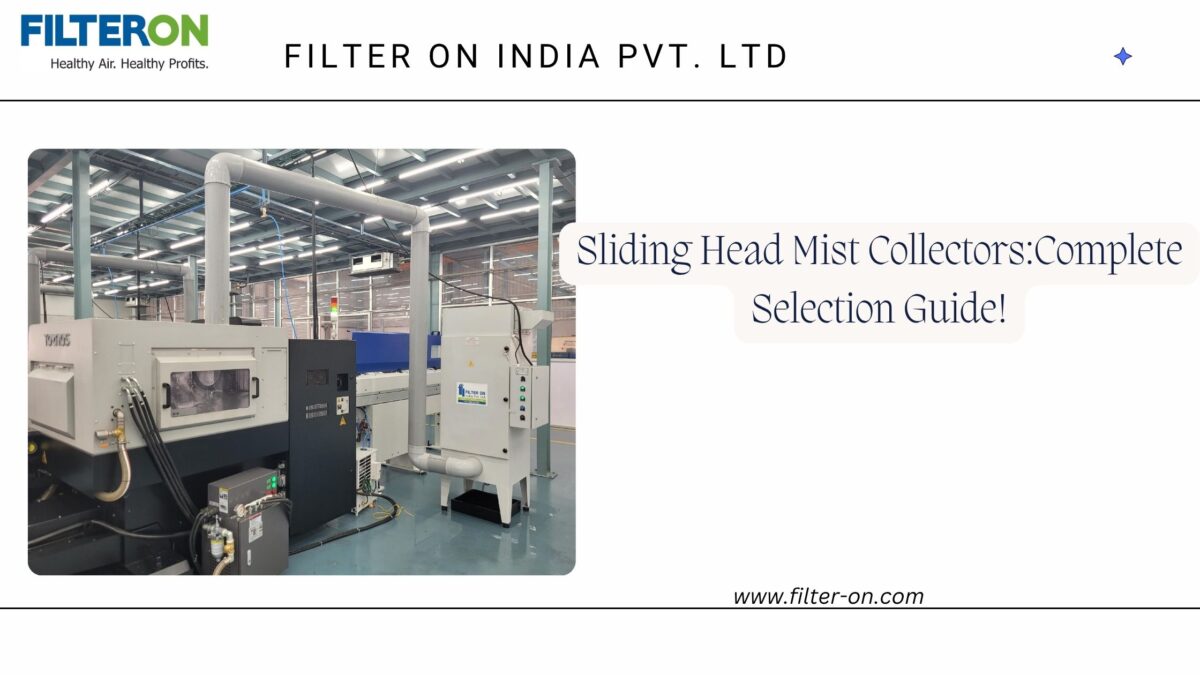
Sliding Head Mist Collectors: Complete Selection Guide

Sliding Head Mist Collectors: Complete Selection Guide!

Oil mist collectors for sliding-head machines precisely control sliding-head mist and fumes. These fumes are very hazardous to health, as these fumes can impact workers and make the work environment polluted. As a result, to control fumes from sliding-head machines, oil mist collectors must have some of the key features that we will be discussing here in this blog post.

Why and What Should You Look For In Sliding Head Mist Collectors:

When we consider a sliding head mist collector for the first time, we need to look at some of the key factors, which are listed below. These reinforce your decision to purchase a right sliding head mist collector.

  • Purpose: Sliding head mist collectors are essential for extracting high-volume, sub-micron oil mists from Swiss-type CNC lathes using high-pressure neat oils.
  • Specialization: These machines require compact and efficient filters due to their operation in tight enclosures with thick, ultra-fine mist.
  • Filtration Efficiency: Look for oil mist collectors with electrostatic precipitators (ESPs) that can capture 95–99% of particles down to 0.3 to 0.5 microns, as other types of standard filters are inadequate.
  • Filter Type: Manufacturers like Filter ON provide specialized ESP filtration solutions tailored for neat oil processing in sliding head lathes.
  • Mounting of sliding head mist collectors: Choose units with a compact design, able to be directly top-mounted onto machine enclosures or pillar mounted near sliding head machines, optimizing shop-floor space while maintaining high capacity (300 m³/hr to 2000 m³/hr). Combining multiple machines in a common larger size Mist Collector system also would save space.

Role of ESP in Sliding Head Mist Collectors:

Electrostatic precipitation is one of the finest technologies to capture harmful particles from sliding head machining Mist & Fumes and filter them and provide clean air back to the work environment. ESP plays a very vital role in sliding head mist collector filtration, as it has the following features:

  • Minimal Power Cost: Unlike the other technologies, ESPs work in very low power due to their innovative electrostatic technology, which uses less power while working.
  • Zero Cost on Filter Replacement: As sliding head mist collectors use ESP cells and their pre- as well as post-filters, all are washable in nature. You can use it for as long as you require by just periodic cleaning based on your usage pattern so that your replacement cost for filters is saved due to this technological advancement.
  • Minimal Pressure Drop: The significant aspect of ESP-based sliding head mist collectors is that they have a limited pressure drop, which is almost 50% less than equivalent capacity Media type filters.

Parameters to decide on a sliding head mist collector:

There are a few parameters you should consider while selecting the best sliding head mist collector, which are the following:
  • Checking the make & model: When selecting a sliding head mist collector, it is essential to check the make and model of the sliding head machine. This information helps determine the appropriate capacity for the mist collector, as different makes and models of sliding heads have unique arrangements for mist generation and discharge. Our (Filter ON’s) sliding head mist collector is compatible with the following brands of sliding head machines:
  1. Citizen
  2. Star
  3. Tornos
  4. Tsugami
  5. Rollomatic
  • Rod Diameter: In sliding head machines, rod diameter has a considerable imp act on machining processes such as cutting forces, spindle speed, coolant flow, and oil mist volume. Larger rod diameters require higher coolant flow and longer cutting cycles, resulting in more coolant and oil mist. Efficient mist collectors gather airborne mist at its source, improving air quality and safety and eliminating slippery leftovers. The ideal mist collector size is determined by coolant type, pressure, enclosure volume, spindle speed, and duty cycle. Thus, for best mist collector performance, entire machining conditions must be evaluated rather than just rod diameter.
  • Oil Pressure: When cutting oil or coolant is supplied under high pressure, it atomizes into fine droplets that create oil mist. Increased oil pressure correlates with more oil atomization, leading to greater airborne mist concentration and the potential need for more efficient mist collectors. For instance, at low pressure (5–20 bar), standard mist collectors suffice; at medium pressure (20–50 bar), higher airflow and filtration are necessary; and at high pressure (50–150+ bar), high-performance collectors are required due to the large amounts of fine mist generated. Sliding head machines utilize high-pressure cutting oil systems to enhance chip breaking, tool cooling, and dimensional accuracy, necessitating careful consideration of oil pressure alongside other factors such as oil flow rate, spindle speed, and machine enclosure size when choosing mist collectors.
  • Material Used: Common materials used in sliding head machining include stainless steel (SS), aluminum, brass, copper, titanium, carbon steel/alloy steel, and engineering plastics. Stainless steel, particularly grades like SS 303, 304, and 316, is often used for medical parts and automotive components, generating fine oil mist due to high cutting resistance. Aluminum, used in electronics and aerospace, produces significant mist at high spindle speeds. Machining brass and copper produces oil mist and fine chips, but titanium requires more oil at higher temperatures, which increases mist formation. Carbon steel and alloy steel produce moderate- to high-mists, depending on the conditions.  The choice of material influences various factors, such as oil temperature and pressure, cutting speed, and chip formation, which affect mist production. For instance, machining stainless steel with high-pressure oil results in finer, more abundant mist compared to brass at lower parameters. All of these materials significantly influence the level of mist exposure generated by sliding head machines.
  • Requirement of Layout: In the case of multiple sliding head machines installed at the plant, one can think of a centralized system for sliding head mist collection, i.e., the layout of the entire plant or the area in which sliding head machines are installed is required to optimize fume and mist generation from there to effectively capture and filter fumes and mists and provide workers with a cleaner work environment.

 If your Sliding head machines operate without proper oil mist control, efficiency is being lost daily.

Evaluate your setup or consult an expert like Filter ON India  to select the right system as per requirement, budget and scope. Contact us to learn more….

Frequently Asked Questions:

1. Why is a mist collector required for a sliding head machine?

Ans: Sliding head machines operate at high spindle speeds and often use high-pressure cutting oil or coolant. This combination produces fine oil mist that can escape into the workplace. A mist collector captures these airborne particles, improving air quality, operator safety, machine cleanliness, and overall productivity.

Ans: The ideal mist collector depends on factors such as coolant type, oil pressure, spindle speed, machine enclosure, and production hours. For machines using neat cutting oil and generating very fine submicron mist, an Electrostatic Precipitator (ESP) is often an excellent choice because of its high filtration efficiency and oil recovery capability.

Ans:Yes, provided the total airflow requirement (CFM or m³/h), duct design, and machine operating schedule are properly calculated. Centralized systems are suitable for multiple machines, while individual units provide dedicated extraction.

Ans:Yes. Many ESP-based and centrifugal mist collectors separate oil from the air stream, allowing recovered oil to drain back into a collection tray. This reduces oil wastage and helps keep the work area clean

Ans: Maintenance frequency depends on machine utilization, oil type, filtration technology, and production hours. Routine inspection and cleaning help maintain airflow, filtration efficiency, and equipment life. Typical cycles vary from once in 6 weeks to once in 4 months.

Visit  blogs to learn more about the critical features of clean air system design and air pollution control systems created by Filter On India.

Filter On India has been working towards “Mission Zero Pollution” for the last 40+ years as a clean air solutions partner for industries. We specialize and have expertise in welding fumes, oil mist, coolant mist, dust collection, soldering, laser marking, laser cutting, plasma cutting, fumes in fastener manufacturing, ball point tip manufacturing, oil quenching, kitchen fumes, etc. Filter On has 70+ clean air solutions, so you can contact us for more information about our solutions. You can reach us through the web or visit us at our corporate office at Pune, or mail us at : marketing@filter-on.com

Facebook
Twitter
LinkedIn
Categories
Blogs

How Oil Mist Collectors Improve Productivity in VMCs and HMC’s

How Oil Mist Collectors Improve Productivity in HMCs and VMC’s.

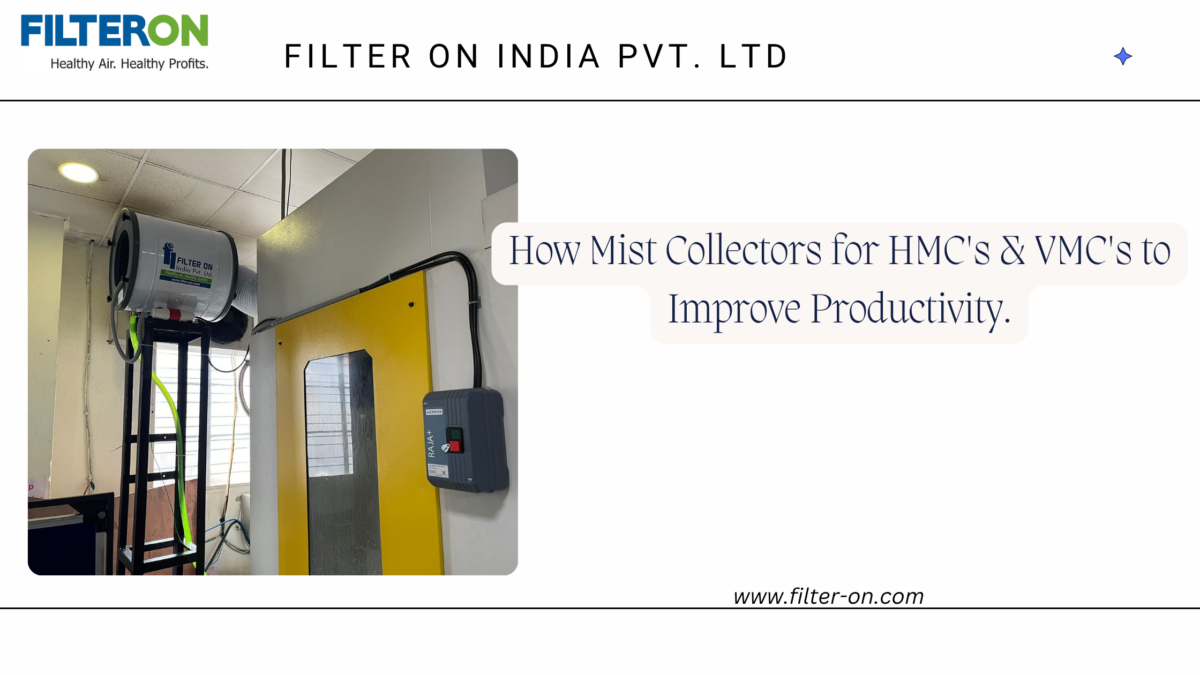
Mist generated during machining in HMCs and VMCs spreads throughout the work environment, creating an unhealthy atmosphere that can lead to various health issues for machine operators. Mist Collectors for HMC's & VMC's provide an effective and efficient solution by capturing coolant and oil mist at the source, helping create a cleaner, safer, and mist-free machining environment. This not only improves worker productivity but also contributes to better indoor air quality and compliance with workplace safety standards. In this blog post, we will discuss "How Oil Mist Collectors Improve Productivity in VMCs and HMCs", covering key aspects such as coolant mist control, filtration efficiency, and oil recovery.

Controlling the mist using Mist Collectors for HMCs & VMCs:

When we think of mist control in HMCs and VMCs, we need to look into coolant mist control, as HMCs and VMCs require coolant to run, and they generate a high amount of mist during operations. To control the coolant mist, we need to know about the following factors:

  • Application Details: It is important to understand the specific application context.
  • Type of oil/coolant:It is important to know whether neat cutting oil or water-soluble coolant is used, as this information is necessary for recommending the appropriate oil mist collector.
  • Machining oil and coolant pressure: Machining oil and coolant pressure (expressed in bar) are required to determine the oil-mist collector capacity and size.
  • Size of Door Opening: The size of the door opening is needed when we consider the oil mist collector, as the size of the door is required for maintenance purposes.
  • Cutting Chamber Size: Cutting chamber size is in LXWXH parameters required to measure how much mist can be generated while cutting the workpiece.
  • Coolant Type:   When we consider coolant mist collectors for HMC and VMC, the type of coolant is necessary to be checked, as there are flood-type and micromist-type coolants. It is important because both of these types generate different mist characteristics, depending on the type.

Key benefits of mist collectors for VMC's & HMC's 


  1. Improved Air Quality for Operators

Mist collectors for HMC’s & VMC’s improve air quality for operators by reducing the airborne coolant mist and smoke. It creates a cleaner and healthier workspace and minimises health issues among workers, such as breathing discomfort and eye irritation as well as long-term health hazards like bronchitis, lung cancer, COPD, etc. 

  1. Reduced Machine Downtime

Mist collectors for HMCs and VMCs improve air quality for operators, thus reducing machine downtime by preventing oil mist build-up inside machine enclosures. It also reduces maintenance interruptions by improving mist exposure. It keeps CNC machines operating efficiently for longer hours by reducing the smoke and mist.

  1. Better Visibility During Machining

When operators are doing machining work, mist spreads all over inside CNC, VMC and HMC machines, especially inside enclosures. Mist collectors remove this fog and mist from enclosures. It helps operators to monitor the machining process clearly, and as a result, it improves accuracy and operational safety.

  1. Longer Machine Life

For longer machine life, a mist collector for HMC’s and VMC’s prevents sticky oil deposits on electrical panels and machine parts. It also reduces wear and tear on sensitive components. It protects bearings, sensors and control systems.

  1. Lower Maintenance Expenses

The maintenance costs of HMC’s and VMC’s  are high due to mist exposure and periodic wear and tear; for that reason, there is a need for a mist collector that is beneficial for cleaning requirements around machines and shop floors. It also reduces coolant quality issues. 

  1. Improved Worker Productivity

For increasing productivity among workers, a mist collector will surely help by creating cleaner environments, which improves the comfort and morale of operators. As exposure to oil mist is controlled by using a mist collector, there will be fewer health-related interruptions and absenteeism. These will help operators focus better on machining operations, which ultimately improves workers’ productivity.

  1. Enhanced Coolant Recovery

Mist collectors for HMC’s & VMC’s  will help in oil and coolant recovery as well; they capture coolant that can be drained back into the machine. They help in reducing coolant wastage. It also improves operational efficiency and cost savings.

  1. Compliance with Industrial Safety Standards

Mist collectors for HMC’s & VMC’s machines contribute to maintaining safer workplace conditions. These mist collectors comply with OSHA, CPCB, and factory safety regulations, ensuring adherence to current standards. By implementing a standard mechanism to control mist, they enhance the company’s reputation and readiness for audits.

  1. Cleaner Overall Shop Environment

Mist collectors for HMC’s & VMC’s clean the shop environment by collecting harmful mist, which prevents oil deposits on floors, walls and lighting fixtures. It reduces slip hazards in machining areas. It maintains professional, organised production spaces very well.

 If your HMC’s & VMC’s  machines operate without proper oil mist control, efficiency is being lost daily.

Evaluate your setup or consult an expert like Filter ON India  to select the right system as per requirement, budget and scope. Contact us to learn more….

Frequently Asked Questions:

1. Why do VMCs and HMCs require oil mist collectors?

Ans: VMCs and HMCs generate coolant mist during machining operations. Oil mist collectors capture these airborne particles, helping maintain cleaner air, improve operator safety, and protect machine components.

Ans: By reducing machine contamination, improving visibility inside enclosures, and minimizing maintenance requirements, oil mist collectors help reduce downtime and improve overall productivity.

Ans:Yes. Oil mist collectors prevent oil deposits from accumulating on electrical panels, sensors, and machine components, reducing wear and maintenance costs while extending equipment life.

Ans:The right solution depends on the coolant type, mist volume, and machining process. ESP-based oil mist collectors are often preferred for their high efficiency, washable filters, and low operating costs in case of neat cutting oil. For soluble coolants,centrifugal type Mist Collector is the optimum choice.

VMCs and HMCs generate coolant mist during machining operations. Oil mist collectors capture these airborne particles, helping maintain cleaner air, improve operator safety, and protect machine components.

Visit  blogs to learn more about the critical features of clean air system design and air pollution control systems created by Filter On India.

Filter On India has been working towards “Mission Zero Pollution” for the last 40+ years as a clean air solutions partner for industries. We specialize and have expertise in welding fumes, oil mist, coolant mist, dust collection, soldering, laser marking, laser cutting, plasma cutting, fumes in fastener manufacturing, ball point tip manufacturing, oil quenching, kitchen fumes, etc. Filter On has 70+ clean air solutions, so you can contact us for more information about our solutions. You can reach us through the web or visit us at our corporate office at Pune, or mail us at : marketing@filter-on.com

Facebook
Twitter
LinkedIn