Categories
Blogs

Optimizing Air Quality: An Extensive Guide to Fan Selection for Clean Air Systems (Part I)

Optimizing Air Quality: An Extensive Guide to Fan Selection for Clean Air Systems (Part I)

We discussed the selection of filtration systems in the previous article. Fan selection is most important in ventilation when we talk about air-moving devices, selection of fan is most important because it has impact on the overall performance of the clean air system, However fan selection is difficult task, so some expert guidance is necessary. Here in this article we will discuss types of fans, some guidelines about how to choose right fan for right application? Etc..

Classification of fans for fan selection

Fans are the primary air-moving devices in industrial applications, so they have been classified into three basic groups:

  • Axial Fans
  • Centrifugal Fans.
  • Special Type Fans

Axial Fans

Industrial Tube Axial fan
Industrial Axial fan

Axial fans are used for high flow rates at lower resistance. Axial fans are of three types:

  • Propeller Fans
  • Tube axial Fans
  • Vane axial Fans

Propeller fans are essential for general ventilation, utilizing blade types like disc or propeller blades for low resistance. Performance is sensitive to resistance, affecting flow rate.

Tube axial fans, also known as duct fans, are fans designed to move air against moderate pressures, typically with narrow or propeller-type blades in a short cylindrical housing.

Vane axial fans, typically mounted in cylindrical housings, are highly efficient and typically used in clean air applications due to their higher pressures.

Types of centrifugal fan

Forward Curve (Squirrel Cages):

Squirrel cages, with their low space requirements and quiet operation, are ideal for low to moderate static pressures in heating and air conditioning work but not recommended for dust or particles that could cause unbalance.

Radial Impellers:

Radial impellers offer a variety of blade shapes, ranging from high efficiency to heavy impact resistance, designed for exhaust systems. These radial blades, with medium tip speeds, handle both clean and dirty air, ensuring efficient material conveying velocities.

Backward-inclined or backward-curved impeller blades

These blades are inclined oppositely to the direction of fan rotation. These types of fans have higher speeds, efficiency, and relatively low noise levels with non-overloading horsepower characteristics.

These impellers have two types:

  • Single-thickness blades and
  • Airfoil blades.

Special Type Fans:

Special Type Duct Fans

Special-type fans, such as in-line centrifugal and vane axial fans, feature backward-inclined blades and similar performance curves to scroll-type centrifugal fans.

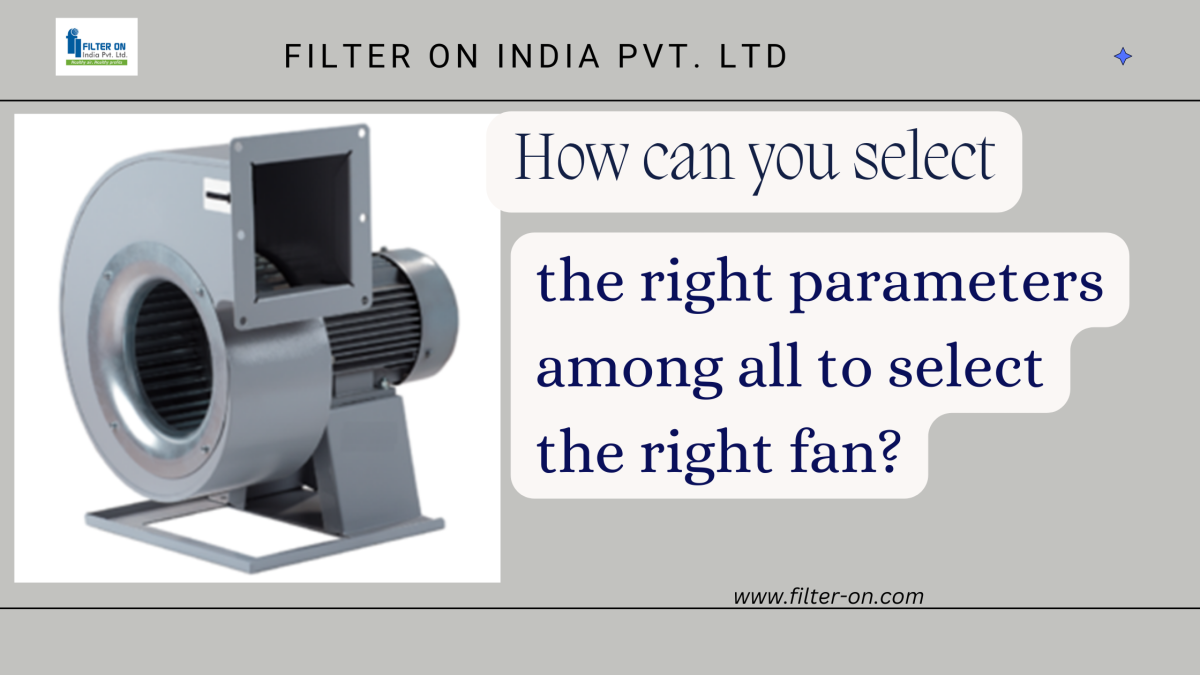
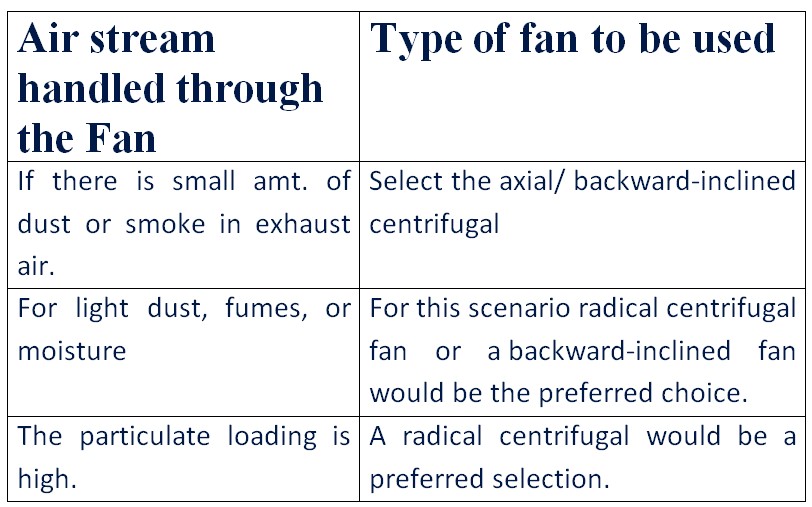
Thus, it is very important to choose the right type of fan for the right kind of application. For example, choosing a forward-curved fan for fume and dust handling will definitely be the wrong choice, as it would lead to the deposition of particles on forward-curved blades and thus imbalance.

How do I select the right fan for the right application?

In conclusion-

  • Choose an axial fan for low-pressure and high-volume clean air ventilation applications (like underground parking or tunnel exhaust ventilation).
  • Choose centrifugal forward-curved fans for fresh air low-pressure applications. You will find these fans most commonly used for small AC units, coolers, etc.
  • Choose centrifugal backward-curved fans for medium-pressure and low- to high-volume applications. These are most commonly used for industrial fume extractors, dust collectors, AHUs of central AC systems, etc.
  • Choose centrifugal radial fans for material movement like pneumatic conveying, dust handling systems, powder handling systems, etc.

In the next article we will explore more about configurations and type of drives of fans which has a significant impact on performance of the system as a whole.

Filter On India has been working towards “Mission Zero Pollution” for the last 40+ years as a clean air solutions partner for industries. We specialize and have expertise in welding fumes, oil mist, coolant mist, dust collection, soldering, laser marking, laser cutting, plasma cutting, fumes in fastener manufacturing, ball point tip manufacturing, oil quenching, kitchen fumes, etc. Filter On has 70+ clean air solutions, so you can contact us for more information about our solutions. You can reach us through the web or visit us at our corporate office at Pune and our virtual locations at Delhi, Bangalore, Ahmadabad, Hyderabad, or Chennai locations.

Facebook
Twitter
LinkedIn
Categories
Blogs

Selecting the right filtration technology: Key To Clean Air System

Selecting the right filtration technology: Key To Clean Air System

Selecting the right filtration technology is a critical task for anyone. In a previous article, we discussed the importance of airflow in pollution control. Now we will look into the filtration technology we use in the clean air system, which is these:? What are their advantages and disadvantages? Which applications are suitable or unsuitable for these technologies? How do you wisely choose the best technology between them, etc.? The answers to all these questions are the focus of this article.

When we talk about filtration technology, we come across the three technologies that Filter On India offers, namely:

  • Electrostatic Precipitation Technology
  • Media Filter / Cartridge Technology
  • Wet Scrubber and Venturi Scrubber Technology

Electrostatic Precipitation Technology: The Advanced Cleaning Technology

Electrostatic precipitation (ESP) technology is a two-stage electrostatic air filtration system used to filter fumes, smoke, mist particles, and dust particles. Filter-On's ESP system uses a metallic and washable filter element to release smoke-free, clean air back into the environment. This technology is effective in handling the smallest particles (0.01 micron to 10 micron) and offers various models to suit various applications, locations, and performance requirements. The ESP system provides high efficiency and excellent return on investment.

BENEFITS:

  • Zero Replacement Cost
  • Low pressure loss saves running costs
  • High efficiency even for submicron particles

Electrostatic Precipitator Technology

Key Applications of Electrostatic Precipitation Technology:

  • Dry Fumes like Soldering, Laser Marking, Spot Welding, Wave Soldering, manual welding, Robotic Welding & SPM etc.
  • Oil Mist Filtration for small CNC machines like ball pen tip-making machines, CNC grinding machines, 5 Axis grinders, Sliding Heads, Gear Cutting / grinding machines, Hobbing machines, Cold Forging, Nut Formers
  • Kitchen fumes filtration

Limitations:

Needs manual cleaning periodically. Thus not suitable in high dust concentration applications like plasma cutting, dry grinding, laser cutting etc. Also, it is not recommended for applications which are fire sensitive e.g. aluminum dust or flammable aerosols. One more application is corrosive acidic fumes, where this technology is not suitable.

Media Filter/Cartridge Technology: The Fine Technology

During various processes such as plasma cutting, laser cutting, grinding, polishing, welding, laser marking, graphite machining, woodworking dry dust and solid particles are generated so this is a simple system that can be easily deployed for the separation of the dry dust and solid particles generated from above processes. Dust-laden air passes through a cartridge filter, capturing fine dust particles, allowing clean air to pass through, ensuring a healthier environment.. In this system, filter cleaning is automatically achieved through reverse pulsed jets of compressed air, and the dust gets accumulated in a bottom tray, which can be easily removed and cleaned.

Media Type/Cartridge Type Technology

BENEFITS:

  • Automatic Cleaning:Routine maintenance of filters is very easy
  • High efficiency
  • Works effectively for heavy dust loads

Key Industrial Applications of Media Filter/Cartridge Technology:

  • Welding fume extraction
  • Grinding Dust Collection
  • Plasma cutting fume extraction
  • Melting furnace fume extraction
  • Saw dust collection in the woodworking industry

Limitations:

This system is not found effective in applications where the pollutant has some wet/liquid part like oil or grease. It clogs the filters early making the system ineffective. Also, if there are possibilities of any sparks/splatters or hot metal particles entering the system, it may cause the fire as the filter material in most of the cases is fire sensitive.

Wet/Venturi Scrubber Technology:

Wet scrubbers are a simple, yet powerful tool for removing particulate matter and other contaminants from gas streams. They work by capturing particulate matter in liquid droplets, which are then collected and dissolving or absorbing the pollutant gas. The efficiency of a wet scrubber depends on the power input and the use of a mist eliminator. Wet scrubbers are typically the only air pollution control device that can remove both pollutants. Water is the most common solvent used to remove inorganic contaminants, and other liquids can also be used as absorbing solutions. The chemical composition of these solutions can change the overall charge, making it crucial to choose the scrubbing liquid that will bind most effectively to remove contaminants from the gas. For industrial air pollution applications, wet scrubbers are designed with premium materials and quality thermoplastic construction, as well as UV-resistant PVC, polypropylene, and polyethylene for outdoor installations.

Wet/Venturi Scrubber Technology

Venturi Scrubber Technology:

Industrial processes often generate hazardous submicron particles, welding fumes, odors, and other water- or chemically-soluble fumes and vapors. The Venturi scrubber is designed to capture these pollutants through adsorption, using energy from the inlet gas stream to atomize the liquid being scrubbed. The section comprises a converging section, a throat section, and a diverging section, with exhaust gas entering the converging section and liquid entering the throat or entrance. The exhaust gas moves at high velocities in the small throat section, shears the liquid from its walls, producing tiny droplets. Particle and gas removal occurs in the throat section, and the exhaust stream exits through the diverging section. Venturi scrubbers can collect both particulate and gaseous pollutants. Wet scrubbers, which use water as a solvent, can also be used to remove inorganic contaminants. The Caustic solution (sodium hydroxide) is the most common scrubbing liquid used for acid-gas control.

Working Principle:

It works on the following principle: it creates a differential between higher velocity gas and the highly energetic turbulence nature of the liquid, which creates droplets, which helps in capturing the contaminants at a faster rate and making them a highly concentrated slurry.

Features:

  • A simple design for the introduction of scrubbing liquid.
  • Fixed Venturi throat dampers
  • The design does not involve mesh pads; instead, it contains a cyclonic separator for mist elimination
  • In order to minimize the consumption of water, it is designed with separate recirculation systems

Advantages :

  • Highly capable of removing pollutants like Corrosive Fumes, Dust, VOCs & Gases. Ability to handle high temperatures
  • The design can be customized based on the application with less cost. Can reduce the high moisture streams
  • Ability to neutralize dust and gasses that are flammable in nature Less maintenance
  • Operates with higher efficiencies (in case of Venturi Scrubber)

Key Industrial Applications of Wet Scrubber Technology:

  • Acid Fumes
  • Flammable Dust Extraction
  • Gas Absorption like Ammonia / H2S / SO2 etc.

Limitations:

Wet Scrubbers need a lot of water. So it can't be used in water scarce regions. Also, the pollutants get absorbed in the water and this water cannot be drained directly anywhere. You need to have an Effluent treatment facility within your plant. In absence of ETP, wet scrubbers cannot be used.

One more limitation is regarding the size. Wet scrubbers are quite big in size as compared with other filtration systems.

Venturi Scrubbers need very high power (highest among all other technologies)

How do I select the right filtration technology?

We have discussed in detail various technologies of filtration, so now which technology is ideal for your application?

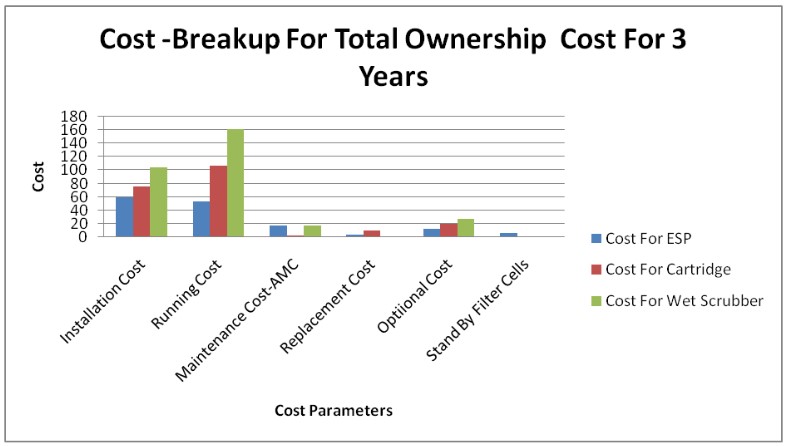
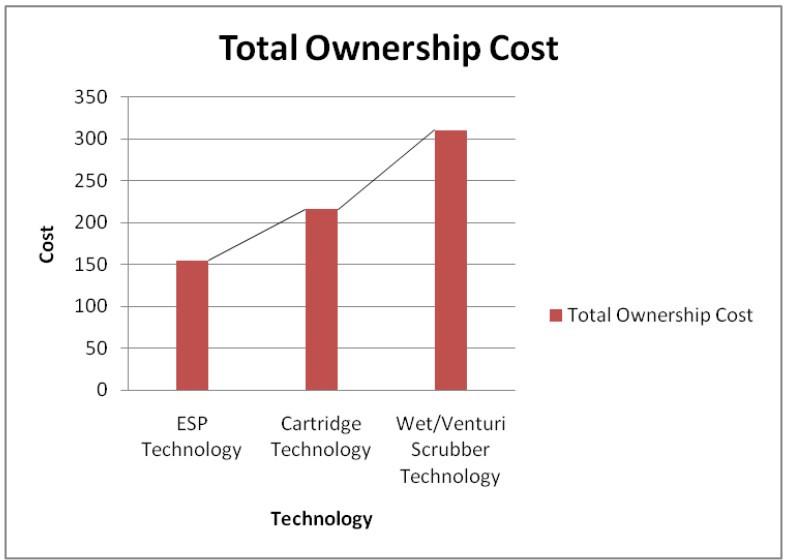
Choosing the best technology for your application is very important when you have quotations from various industrial players. It may include electrostatic precipitation technology, cartridge technology, and wet/venturi scrubber technology. All these technologies have advantages as well as some limitations, but when you look at the long run, You must look into the answers to some of the questions first.

  1. Whether this technology is suitable for my application?
  2. What is the power cost of using the filtration technology?
  3. What is the replacement cost & frequency of replacement?
  4. What is the maintenance cost for filtration technology?

All these questions are very important in the selection of the filtration technology for your application, so Filter On India can give you expert advice and help you decide which is the right filtration technology for your application or combinations of one or two of the technologies for your application.

Benefits of choosing the right filtration technology for your applications:

  • Cost saving
  • Long-Term Working
  • Power Saving
  • Low Maintenance Cost
  • Efficiency in Working

Filter On India has been working towards “Mission Zero Pollution” for the last 40+ years as a clean air solutions partner for industries. Filter On has 70+ clean air solutions, so you can contact us for more information about our solutions. You can reach us through the web or visit us at Pune, Delhi, Bangalore, Ahmedabad, Hyderabad or Chennai locations.

Facebook
Twitter
LinkedIn
Categories
Blogs

Optimizing Fume Capture: Essential Air Flow Calculation Strategies

Optimizing Fume Capture: Essential Air Flow Calculation Strategies

( Air Flow: The Most Important Parameter for the Effectiveness of Air Pollution Control Systems )

When designing a clean air system air flow calculation is most important task and formulating the air flow calculation strategy for it is most important as we discussed in a previous blog article how you can plan a complete, clean air system. with the help of an air quality mapping test and various factors such as OSHA, ISO, and ACGIH standards. After identification and selection of the fume sources, it is important to understand the basic aspects that make the fume extraction and clean air system successful. These are: 1. Effective Capture of Fumes; and 2. Efficient Filtration of Fumes. In this article, we are discussing how we can capture fumes effectively. and knowing the various standards set by OSHA, ISO, and ACGIH for air flow calculations, as well as capturing the fumes to find the fume extractor capacity requirement, i.e., CMH calculations.

What is air flow?

Airflow is the volume of air moved by a fan per unit of time, usually expressed in cubic feet per minute (CFM) or meters cubed per hour (m3/hr, or CMH). For general ventilation, airflow can be calculated using the area method. Air change method. Occupancy method.

Why is air flow an important metric in ventilation?

The important metric for ventilation is to control the rate of airflow. It is also important to minimize the airflow rate at any given time without compromising the main purpose of the ventilation system, which is good indoor air quality and thermal comfort. One of the easiest ways to save energy is by controlling the rate of airflow.

After identifying the source of fume generation and finding the various sources of fume generation, we can now look at how we can capture these fumes. Here are some factors responsible for capturing fumes.

  • Design of the Suction Hood
  • Proper Blower Capacity
  • Suction Hood Dimensions
  • Distance from the Fume Generation Point
  • Types of Fumes to Be Captured

Fig: Types of hoods and enclosures

Fig:Types of hoods and enclosures

Welding Operation

Fig: Welding Operation

The design of the suction hood and the proper capacity of the blower are two of the most critical aspects of any fume extraction system. If we can’t capture fumes effectively, the fumes can't be treated. In the absence of effective capture, fumes will escape from the suction hood and spread throughout the indoor environment, which makes fume extraction systems ineffective.

To optimize the size of such a system, we need to provide an enclosure when the application from which fumes are generated; this will reduce the required airflow as well. E.g A welding table can be provided with an enclosure on three sides and a canopy hood on the top, as shown in the following image.

Sample calculations [case study]

To calculate the air flow in the welding booth, we can use:

A: length of operator side opening

B: Height from Job up to Canopy Hood

** All three sides should be closed up to jobs as shown in the photo.

Air Flow (in Cu M/Hr, i.e., CMH)

= A (in M) X B (in M) X 0.25 X 3600

e.g., if A = 1.2M and B = 1.2M, as shown in the photo, then

Manual welding booth Fume Extraction

Air flow = 1.1 x 1.1 x 0.25 x 3600

= 1089 CMH

From the above example, you may understand that air flow is very important in designing a proper, clean air system. If you want to plan a clean air system, then you must know a few things.

To maintain adequate air flow in the clean air system, the following factors are responsible:

  • Duct losses
  • Friction losses
  • Fitting Losses

So you can plan an effective clean air system with the help of the above example and some of the factors discussed above, keeping in mind that an effective clean air system requires adequate air flow capacity to capture fumes effectively. Neither a low nor a high level of CFM is required, i.e., to design a proper clean air system, expert advice is needed, and Filter On India can surely help in this regard.

[While comparing any alternatives, the first parameter to be compared is the CFM or CMH value of air flow.]

Filter On India has been working towards “Mission Zero Pollution” for the last 40+ years as a clean air solutions partner for industries. Filter On has 70+ clean air solutions, so you can contact us for more information about our solutions. You can reach us through the web or visit us at Pune, Delhi, Bangalore,Ahmedabad, Hyderabad or Chennai locations.

Facebook
Twitter
LinkedIn
Categories
Blogs

Designing A Complete Clean Air System: A Guide To Effective Planning

Designing A Complete Clean Air System: A Guide To Effective Planning

Planning is the first step when you think of any new project or anything that needs to be organized. For example, if you want to organize a workshop on some industrial topic, you need to plan the most important aspects carefully, such as the date and time of the workshop, the venue, the visiting guest, the number of attendees, and so on. Similar principles apply when you plan a total clean air project solution. In industries with continuous production, numerous applications like welding, brazing, gauging, soldering, laser cutting, plasma cutting are performed every day. Fumes generated from these processes are hazardous for operators or workers and can disturb the entire work environment. Therefore, it is essential to plan a clean air system strategically to ensure effective operation and worker safety. In this article, we discuss how to implement a clean air system efficiently.

Planning a clean air system

Why is planning a clean air system important ?

One of the biggest reasons for failure to implement clean air systems in manufacturing industries is a lack of awareness about the importance of the planning phase. Because of this, the implementation of clean air systems is done in a very haphazard manner with a fragmented approach. The result is that resources are spent without much result on the ground. This can be avoided if proper planning for clean air systems is made.

What to Plan for Clean Air Systems?

The final objective of any clean air system implementation is to minimize exposure to air pollution for people working in close proximity to various processes and ensure protection of their health and productivity. Thus, the plan should be aligned with this objective. There are certain standards set for ambient air quality that are recommended to be followed by global bodies like ACGIH (American Conference of Governmental and Industrial Hygienists), OSHA, ISO, etc., which are also adopted by local regulatory authorities like the Factories Act and CPCB.

The first step in planning the clean air systems properly is to check the actual air quality at the workplace and compare it with the standard’s requirements. This will bring visibility to where the gaps in compliance are. Which stations are most polluting? And such stations would be the best candidates to start the implementation of clean air systems, as they will give maximum returns on invested resources.

This exercise is known as air quality mapping. FilterON provides this service with the help of a real-time laser aerosol monitoring system. This exercise would provide very important baseline data on pollution levels at each station for the users, which can be a great input for decision-makers.

How is air quality mapping done to plan a clean air system effectively?

A Filter A representative with expertise in the air pollution control system sector will take samples from each and every robotic and manual welding station. With the help of a portable digital aerosol monitor, the reading of air quality in terms of mg/M3 of dust concentration is recorded. These readings are plotted on the layout and marked as red, yellow, and green categories.

Red: Pollution levels are way higher than the requirements of the standard

Yellow: pollution level on the borderline of the upper limit recommended in the standard and

Green: pollution levels below the limits mentioned in standards (i.e., safe air quality).

This mapping exercise will be followed by a recommendation and a report regarding:

To reduce pollution levels drastically, where should I focus the resources most?

Which type of system would be best suited for the said applications?

This exercise would help users define the requirements of planning an clean air systems more objectively and rationally, and it would be a great planning tool for the implementation of effective clean air systems.

How does air quality mapping help in planning clean air system?

  • AQ Map can help identify the ‘hot spots’ i.e., workstations generating the highest pollution in the layout
  • Can help the planners ‘prioritize’ the budgets for these ‘hot spots’ so that maximum effectiveness can be achieved in any given budget.
  • Generally, 20% of the workstations in the layout will be responsible for generating 80% of pollution. The AQ Map helps the planner identify those 20% of workstations for ‘targeted action'.
  • It helps the planners to chalk out the ‘Clean Air Plan’ and implement it phase-wise. The AQ Map becomes an effective tool for monitoring the progress of such a plan.

Filter On India has been working towards “Mission Zero Pollution” for the last 40+ years as a clean air solutions partner for industries. Filter On has 70+ clean air solutions, so you can contact us for more information about our solutions. You can reach us through the web or visit us at Pune, Delhi, Bangalore, or Chennai locations.

Facebook
Twitter
LinkedIn
Categories
Blogs

Understanding CO2: Pollution, Impact And Proactive Solutions.

Understanding CO2: Pollution, Impact And Proactive Solutions.

In today’s world, air pollution is a huge and serious issue. Alarming sea levels and the effects of global warming are seen everywhere. Carbon dioxide (CO2) is a major pollutant among all pollutants. It’s effects on the health and environment are problematic in nature. When we talk about industrial pollution, it is one of the problems as well, so in this article, we’ll discuss CO2 and the role of CO2 in air pollution. Its impact on industrial workers as well as industries, the environment, preventive measures, compliance, etc.

What is CO2?

Carbon dioxide is a chemical compound with the chemical formula CO2. It is made up of molecules that each have one carbon atom covalently double-bonded to two oxygen atoms.

CO2 as a Pollutant

Carbon dioxide is a major pollutant in air pollution. When talking about air pollution, this greenhouse gas has a major portion in it.

Sources of CO2 Pollution in the Industrial Indoor Work Environment

There are numerous sources of CO2 pollution. We are here discussing CO2 and its effects on the workplace environment and workers health.

There are mainly four types of sources of CO2 often seen in the indoor industrial environment.

Respiration from employees.
Burning of fuels
Industrial Operations
Goods Transportation

Respiration from Employees

In a close work environment, mostly in offices, CO2 is mostly generated by respiration among the employees.

Burning of Fossil Fuels

The burning of fossil fuels for the operation of machinery is another way of generating CO2, and if there is low ventilation, the CO2 can be hazardous to the workers.

Industrial Operations-

Industrial operations, i.e., processes like welding, cutting, and brazing of metals, generate CO2 because fumes from these processes are more hazardous to the health of the workers. These processes produce more CO2, and without proper ventilation and fume collection systems, in most of the industries, workers face various health issues due to CO2 pollution.

Goods Movement-

Goods movement or transportation in a closed environment where trucks and cranes are used for goods movement in large premises generates CO2 generated through vehicles, which is harmful for the workers and employees who used to work there.

Thus, CO2 as a pollutant plays a major role in industrial indoor air pollution.

Impact of Carbon Dioxide (CO2) on Health:
Short-Term Health Effects:
Exposure to high carbon dioxide levels can cause:

Suffocation by displacement of air: The suffocation-exposed person has no warning and cannot sense the oxygen level is too low, so it leads to a breathing issue.

Incapacitation and unconsciousness: At high concentrations, carbon dioxide can cause unconsciousness and respiratory arrest within one minute.

Headaches: Excessive amounts of carbon dioxide inhalation can cause headaches.

Vertigo and double vision: Carbon dioxide exposure can cause vertigo and double vision. At high levels of exposure, the carbon dioxide itself can cause vertigo, dizziness, nausea, and other symptoms like double vision.

Inability to concentrate: High exposure levels of CO2 lead to concentration problems while working; suffocating environments can cause an inability to concentrate, which results in productivity loss.

Tinnitus: According to one study, chronic tinnitus is related to multisensory environmental hypersensitivity, including CO2 thresholds. Another study reports that tinnitus has been reported in hearing loss secondary to carbon monoxide poisoning.

Seizures: Carbon dioxide (CO2) can increase brain excitability, which can lead to spontaneous seizures.

Breathing in high amounts of carbon dioxide may be life-threatening.

Touching liquid carbon dioxide can cause frostbite or blisters.

Carbon dioxide can cause frostbite when anyone is in contact with solid CO2 (dry ice) and vapors off-gassing from dry ice.

These frostbite blisters on the skin may begin to feel warm—a sign of serious skin involvement. If you treat frostbite with rewarming at this stage, the surface of the skin may appear mottled. And you may notice stinging, burning, and swelling. A fluid-filled blister may appear 12 to 36 hours after rewarming the skin.

Long-Term Health Effects: Prolonged exposure to carbon dioxide may cause:

Changes in bone calcium-induced respiratory acidosis induced by an elevated carbon dioxide (CO2) environment should provoke hypercalciuria with related total body and subsequent bone calcium losses. often leads to osteoporosis.

Changes in body metabolism: In the human body, carbon dioxide is formed intracellularly as a byproduct of metabolism.

Levels of CO2 Exposure to Health

Safe exposure limits for carbon dioxide (CO2):

According to the US Health Department, carbon dioxide is not generally found at hazardous levels in indoor environments. The MNDOLI has set workplace safety standards of 10,000 ppm for an 8-hour period and 30,000 ppm for a 15-minute period. This means the average concentration over an 8-hour period should not exceed 10,000 ppm, and the average concentration over a 15-minute period should not exceed 30,000 ppm. It is unusual to find such continuously high levels indoors and extremely rare in non-industrial workplaces. These standards were developed for healthy working adults and may not be appropriate for sensitive populations, such as children and the elderly. MDH is not aware of lower standards developed for the general public that would be protective of sensitive individuals.

In the Indian context, the exposure limits for CO2 are as follows: CO2 < 1000 PPM (home) < 5000 PPM (workplace-short duration).

Proactive Solutions for CO2 Emissions in Industries


Measure your CO2 levels in industries.
You can measure CO2 levels at your workplace by using a CO2 sensor. The most common type of sensor is the non-dispersive infrared (NDIR) sensor. This sensor measures infrared light in a sample of air. NDIR sensors are popular because they have a long life, are fast, and have low cross-sensitivity to other gases. They can measure CO2 concentrations with high accuracy across a wide range of volumes. The measuring unit detects the CO2 concentration and converts it into a digital display.

Use renewable energy solutions.
You can use renewable energy solutions for CO2 reduction from traditional energy sources. Sources like solar energy and wind energy can reduce the carbon footprint and make industries self-sustainable in the long run.
Use ventilation solutions.
Using ventilation solutions such as local exhaust ventilation, an adequate amount of air flow through windows, and proper placement of machines that are responsible for CO2 generation with effective measures can reduce the carbon footprint in industries.

Use extraction solutions.
Clean air solutions like fume extraction, oil/mist collectors, dust collection systems, and laser cutting extraction solutions can reduce CO2 exposure in industries, which helps workers get proper ventilation at work and can have a positive impact on their productivity.

Filter On India has been working towards “Mission Zero Pollution” for the last 40+ years as a clean air solutions partner for industries. Filter On has 70+ clean air solutions, so you can contact us for more information about our solutions. You can reach us through the web or visit us at Pune, Delhi, Bangalore, or Chennai locations.