Categories
Blogs

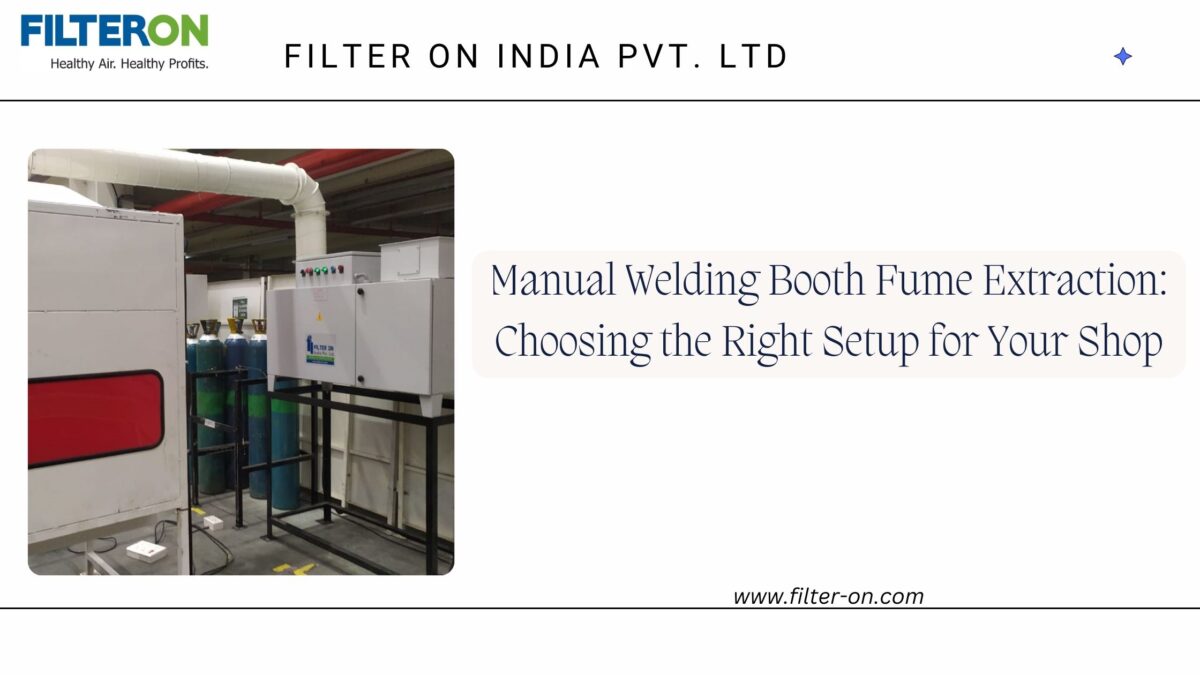
Manual Welding Booth Fume Extraction: Choosing the Right Setup for Your Shop

Manual Welding Booth Fume Extraction: Choosing the Right Setup for Your Shop

Manual welding is an integral part of almost every manufacturing setup. Unlike robotic welding, which requires a higher investment and budget, manual welding is cost-effective and fits well within most operational budgets. That is why manual welding stations are present in nearly every manufacturing facility. However, an important question remains: what is the status of fume extraction at these manual welding stations?

Large organizations generally have the capability to install fume extraction systems for both manual and robotic welding stations unlike the small ones. In this article, we will cover Manual Welding Booth Fume Extraction in detail and discuss the right setup strategy for your welding shop.

Introduction to Manual Welding Fume Extraction

Manual welding includes various welding processes such as MIG welding, Stick welding, TIG welding, Plasma Arc welding, Electron Beam welding, and Laser welding. Each of these welding types generates fumes with different characteristics and therefore requires a suitable fume extraction system based on the welding process and several operational parameters. These parameters will be discussed one by one, starting with the potential dangers associated with manual welding.

Potential Dangers Due to Manual Welding

The risks associated with manual welding can be broadly categorized into immediate hazards and long-term health consequences, as outlined below.

Immediate Physical Dangers to workers:

  • Risk of getting electric shock: One of the most serious and immediate risks. Contact with live components, such as the electrode holder, can result in severe injury or fatal electrocution, especially in damp or wet conditions.
  • Skin burns: Welding temperatures can exceed 10,000°F, causing instant burns from arc contact, molten metal spatter, or hot workpieces.
  • Fire and Explosions: Sparks and hot spatter can travel up to 35 feet, easily igniting flammable materials, gas cylinders, or residues inside used containers such as drums.
  • Eye Injuries: “Arc eye” or welder’s flash is a painful corneal burn caused by ultraviolet radiation and can occur within seconds. Intense infrared radiation may also lead to immediate retinal damage.

Health Risks from Manual Welding Fumes

Manual welding produces a complex mixture of toxic metal particles and hazardous gases.

  • Respiratory Illness: Short-term exposure can cause metal fume fever, throat irritation, and breathing discomfort. Long-term exposure is linked to lung cancer, kidney cancer, and chronic obstructive pulmonary disease (COPD).
  • Neurological Damage: Inhalation of manganese fumes, commonly generated during mild steel welding, can cause irreversible nervous system damage and symptoms similar to Parkinson’s disease.
  • Suffocation: In confined spaces, shielding gases such as argon or helium can displace oxygen, leading to rapid unconsciousness or even death.

Long-Term Hazards

  • Radiation Exposure: Prolonged exposure to ultraviolet radiation increases the risk of skin cancer and ocular melanoma.
  • Hearing Loss: Noise from welding, grinding, and cutting operations often exceeds 85–100 decibels, which can result in permanent hearing damage over time.
  • Muscle or Joint Pains: Repetitive movements and sustained awkward postures can lead to chronic back, shoulder, and neck pain.

2025 Safety Standards

  • Mandatory Controls: Regulatory authorities such as HSE, CPCB, EPA, and OSHA state that welding operations should not be carried out without appropriate fume extraction or respiratory protection, regardless of job duration.
  • Strict Exposure Limits: As of 2025, several regions have reduced workplace exposure limits for welding fumes, including aluminum fumes, to improve worker safety.
Manual Welding Booth Fume Extraction: Choosing the Right Setup for Your Shop

Manual Welding Fume Extraction: What It Is and How It Works

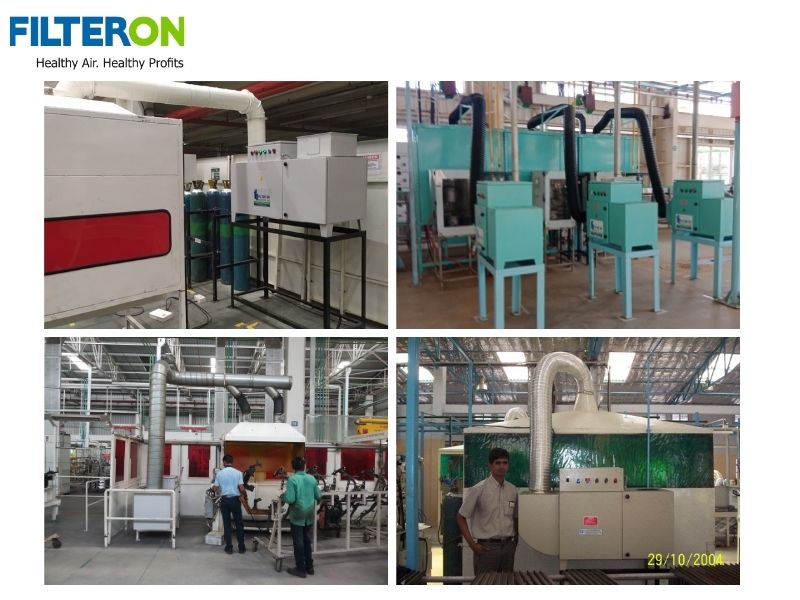
The working principle of a manual welding fume extraction system involves capturing fumes directly at the source. A hood is installed above or beside the welding station and connected to the fume extractor through ducting. Welding fumes are drawn through the hood and ducts into the filtration unit, where fine particulate matter is captured. Clean air is then discharged through the extractor fan back into the workplace or outside, depending on the system design.

A properly engineered fume extraction system is essential to capture hazardous fumes directly at the source before they disperse into the work environment.
Equipment such as a fume collector, fume extractor, or fumes extractor plays a key role in improving workplace safety and ensuring compliance with occupational health standards.
For applications involving gaseous pollutants, a fume scrubber system is commonly used to neutralize harmful vapors before air is released or recirculated.

Welding fume extraction solutions for Manual Welding Booths:

Welding operations generate toxic metal fumes that require effective source capture. A dedicated fume extractor for welding or fume extractor welding setup helps control exposure in manual and automated welding stations.

A complete welding fume extraction system or welding exhaust system is designed based on welding type, enclosure conditions, and duty cycle.

Proper welding fume exhaust not only improves air quality but also supports regulatory compliance, while system selection from certified welding fume extractor manufacturers ensures reliability and long-term performance.

The welding fume extractor price typically depends on airflow capacity, filtration efficiency, and system configuration.

Factors to Consider for Manual Welding Fume Extraction

When selecting a manual welding fume extraction system, several important factors must be considered.

  • Number of Manual Welding Stations:  The number of manual welding stations plays a key role in determining the size and capacity of the fume extraction system. It directly impacts the total airflow requirement and the coverage area of the system.
  • Type of Welding & Manual  welding  fume extraction: Each welding process ARC, MIG, or TIG requires a fume extraction system designed according to its specific fume generation pattern and operational characteristics.
  • Size of Welding Fixture or Table (L × W × H):  The dimensions of the welding table or fixture are essential for calculating the required airflow capacity (CMH) of the fume extraction system.
  • Enclosure Details: The level of enclosure around the welding booth whether fully enclosed, partially enclosed, or open directly affects fume capture efficiency and exposure levels.
  • Material Handling System: The type of material handling system used, such as manual handling, automated systems, or EOT cranes, influences the placement and configuration of the fume extraction system.
  • Welding Cycle Time:; The actual duration of welding operations determines overall fume exposure and helps define the required extraction capacity.
  • Layout Availability: If a detailed layout is available, it becomes easier to plan optimal placement of the fume extractor and ducting. Proper layout planning ensures effective fume control without obstructing worker movement or compromising safety.
Frequently Asked Questions (FAQs)

Is fume extraction mandatory for manual welding?
Yes. Safety authorities such as OSHA, HSE, CPCB, and EPA mandate the use of appropriate fume extraction or respiratory controls during manual welding to reduce exposure to hazardous fumes and protect worker health.

Which fume extraction system is best for manual welding booths?
The ideal system depends on factors such as the welding process, number of welding stations, enclosure design, and airflow requirements. Common solutions include extraction arms, welding hoods, and downdraft tables that capture fumes directly at the source.

Are welding fumes harmful during short welding operations?
Yes. Even short-term exposure can cause metal fume fever, respiratory irritation, and eye discomfort. Repeated exposure without proper fume control can result in serious long-term health issues.

Can one fume extractor serve multiple manual welding stations?

Yes. A centralized fume extraction system can serve multiple manual welding stations if it is properly designed with adequate airflow capacity, balanced ducting, and effective fume capture at each station.

Visit  blogs to learn more about the critical features of clean air system design and air pollution control systems created by Filter On India.
Filter On India has been working towards “Mission Zero Pollution” for the last 40+ years as a clean air solutions partner for industries. We specialize and have expertise in welding fumes, oil mist, coolant mist, dust collection, soldering, laser marking, laser cutting, plasma cutting, fumes in fastener manufacturing, ball point tip manufacturing, oil quenching, kitchen fumes, etc. Filter On has 70+ clean air solutions, so you can contact us for more information about our solutions. You can reach us through the web or visit us at our corporate office at Pune, or mail us at : marketing@filter-on.com

Facebook
Twitter
LinkedIn
Categories
Blogs

Comprehensive Guide to Industrial Air Filtration & Fume Extraction Solution

Comprehensive Guide to Industrial Air Filtration & Fume Extraction Solution

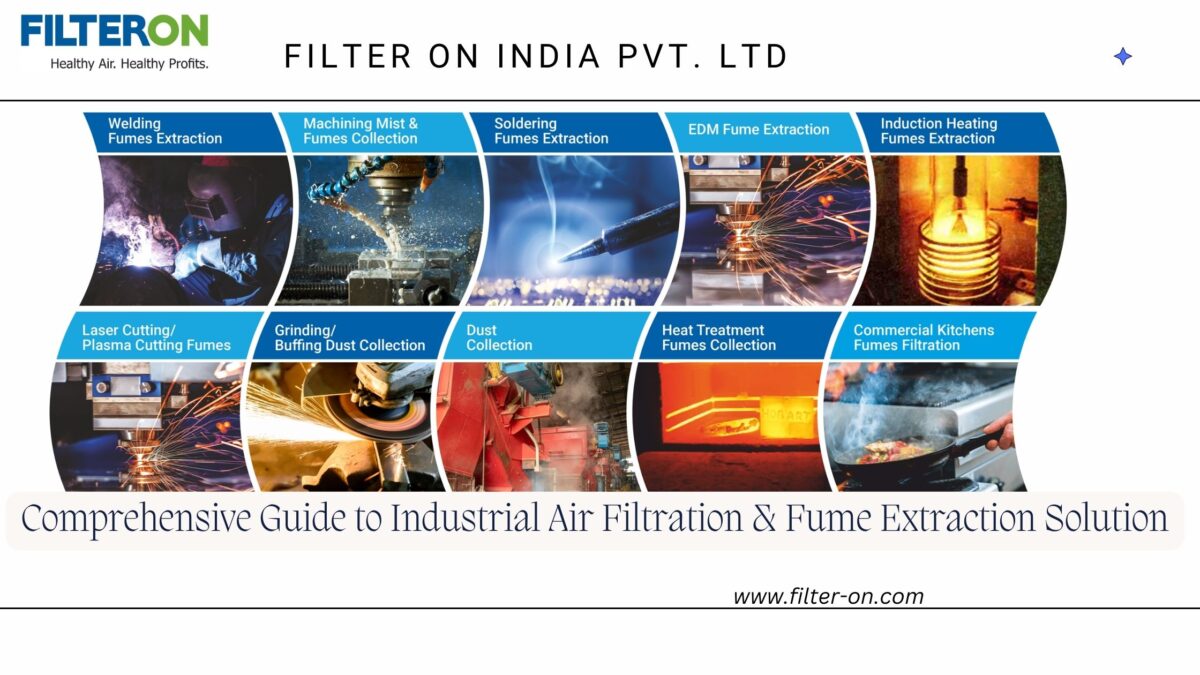
Industrial air filtration and fume extraction for various industrial processes are hot topics nowadays in every industry. As fumes arise from welding, grinding, plasma cutting, laser marking, and other applications, these applications produce harmful fumes and mists, which will affect workers' health issues and productivity issues. Whether it is through an industrial welding fume extractor, an oil mist collector for CNC machines, or specialized pollution control equipment, clean air solutions are now essential for every factory. Here in this blog, we will discuss a comprehensive guide to industrial air filtration & fume extraction solutions by analyzing various applications, their fume exposures, health risks, and possible solutions.

Importance of Clean Air in the Industry:

  • Clean air is essential for health and safety.->Clean air through industrial air filtration and fume extraction systems is essential for health and safety. It helps protect workers from respiratory issues, allergies, and long-term health problems caused by pollutants. Solutions like solder fume extractors or kitchen exhaust scrubbers help reduce exposure in specific applications.
  • Improved air quality boosts productivity.-> Employees perform better in environments where they can breathe easily and feel comfortable. Installing specific solutions such as portable fume extractors for welding can directly improve the comfort and output.
  • It reduces health risks and absenteeism.-> Fewer illnesses mean lower healthcare costs and more consistent workforce availability.
  • Enhances the company’s reputation and goodwill.-> A commitment to clean air demonstrates corporate responsibility, improving public and collaborators’ trust. Adopting pollution control solutions helps to enhance a company’s reputation and goodwill.
  • Facilitates regulatory compliance.->Maintaining clean air helps industries meet occupational safety and environmental regulations more easily.

To obtain the aforementioned advantages, you must first examine the risks of welding fumes, as well as the reasons for implementing clean air solutions more quickly. Equipment like welding fume extractors or electrostatic precipitators helps industries meet safety and environmental standards. Effective pollution control devices in industries reduce harmful emissions and improve compliance with regulations.

Dangers of Industrial Fumes and Pollutants

In the modern world, neglecting industrial air filtration and fume extraction exposes workplaces to serious risks for anyone who  keep industrial environments’ air clean:

  • Health Risks at Workplaces
    Exposure to industrial fumes can lead to respiratory conditions and chronic illnesses, and without a welding fume extractor or proper fume extraction system, workers face bronchitis or even cancer and other long-term health complications. This has an adverse effect on the morale and well-being of employees.
  • Reduced Air Quality in the Workplace
    Pollutants degrade indoor air quality, making the work environment uncomfortable and potentially hazardous. This can result in breathing difficulties and decreased concentration among staff. A compact solution like a mobile welding fume extractor is designed to improve air quality in smaller work areas.
  • Damage to Equipment and Operations
    Industrial mists and fumes have the potential to contaminate or corrode machinery, resulting in unplanned production shutdowns, higher maintenance expenses, and more frequent breakdowns. An electrostatic oil mist collector prevents sticky mist buildup on CNC and grinding machines.
  • Decline in Workforce Productivity
    Health issues, absenteeism, and general discomfort among employees due to poor air quality contribute to reduced efficiency and lower output. A spot fume extractor placed near welding stations can significantly improve concentration and output.
  • Negative Impact on Reputation and Compliance                                                                                                                                                                  Poor air quality can harm a company’s reputation, signaling neglect of environmental responsibility and worker safety. It may also result in non-compliance with occupational health and environmental laws, resulting in fines or other consequences. Modern pollution control devices in industries not only prevent penalties but also project a strong image of responsibility.
Here we will quickly summarizes the main aspects above
AspectBenefits of Using Fume Extraction SystemsDangers of Not Using Fume Extraction Systems
Employee HealthReduces exposure to harmful pollutants, improving respiratory healthIncreased risk of chronic illness, respiratory problems, and allergic reactions
Air QualityMaintains clean indoor air for a safer and more comfortable workplacePoor air quality leads to discomfort, breathing issues, and reduced concentration
ProductivityHealthier employees are more productive and focusedSick workers and discomfort lower productivity and increase absenteeism
Equipment LongevityPrevents fume buildup on machinery, reducing wear and tearFumes can corrode equipment, cause malfunctions, and increase maintenance costs
Regulatory ComplianceHelps meet occupational health and environmental standardsMay result in violations, fines, or shutdowns for non-compliance
Company Reputation & GoodwillDemonstrates corporate responsibility and care for workers and environmentNegative public image due to unsafe working conditions

Overview of Industrial Pollution Control Technologies:

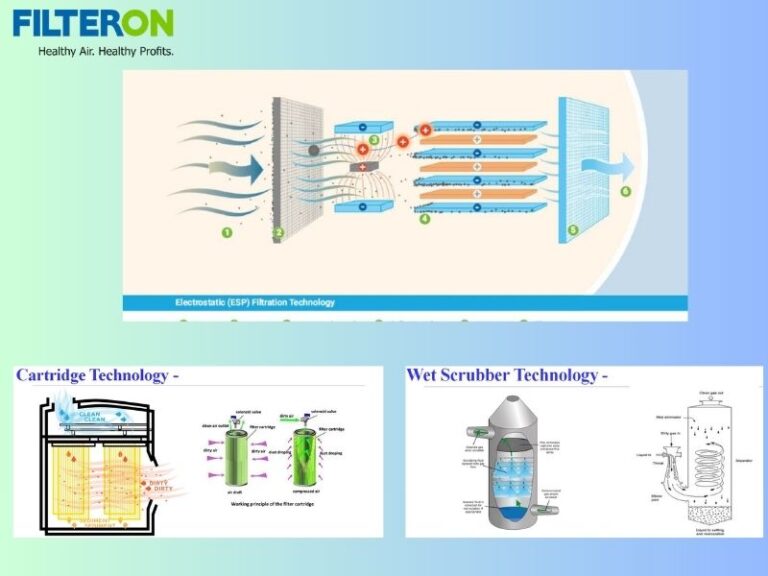
At Filter-ON, we combine advanced technologies to deliver industrial air filtration and fume extraction solutions, including ESP, cartridge, scrubbers, and centrifugal systems., Here is a summarized version of what we do.

Filter ON Technology
Filter ON Technology-ESP, Cartridge & Wet Scrubber
  1. Filter-ON ESP (Electrostatic Precipitator Technology): The electrostatic precipitation concept is the basis for how an electrostatic air filter operates. High voltage is used to ionize the small, submicron particles in the air, and the charged particles are then gathered on electrode plates with opposing polarities. An electrostatic force of attraction holds the particles that are deposited on the electrode plates in place. Clean, filtered air is expelled from the system in this manner, which separates the small, submicron-sized solid/liquid particles from the air stream.
    The principle of electrostatic precipitator working is widely applied in fume extraction, offering high efficiency at low operating costs. Industries evaluate both the electrostatic precipitator price and its long-term benefits, like zero filter replacement costs.
    With over 95% electrostatic precipitator efficiency, it is one of the most trusted technologies for fine particle filtration.

    Among the special benefits of electrostatic filters are

    • ·Cleanable and reusable filters have no replacement costs.
    • · The capacity to efficiently capture minuscule smoke, fume, and mist particles.
    • ·Extremely low pressure drops reduce fan power and, consequently, operating expenses.
  2. Bag/Cartridge Type Dust Collectors: Filter ON provides Bag/Cartridge Type Dust Collectors, which are efficient solutions for a variety of typical air pollution issues in industrial businesses. The equipment in this totally customized range is constructed in accordance with the site’s and the application’s exact needs. Systems with air flow capacity ranging from 1000 CMH to 60,000 CMH are available with different combinations of filtration area, filter media, static pressures, hopper configurations, etc.
    Operation: The cartridge filters draw in dusty air. On the outside of the filters, the dust layer accumulates. After a certain amount of time, a jet of compressed air is forced through the cartridge in the opposite direction. As a result, the dust that accumulates on the filter’s surface falls and gathers in the dustbin. Periodically, the dustbin has to be cleaned.  Here are the 

Advantages and Features 

  • We utilize German cartridges that have 99%+ filtration effectiveness down to 0.5 micron particles, making it feasible to filter fine dust. As a result, the air that is released from the outlet is safe, filtered, and clean for usage within the workplace.
  • The dust collecting pan only needed to be cleaned occasionally; automatic cleaning eliminated the need for ongoing maintenance.
  • Depending on the application, the cartridge life is 18–24 months

 Various sizes and configurations are available based on the demands of the application; a pressure gauge is supplied to indicate the condition of the cartridge filters.

 3. Centrifugal Coolant-Imperial Mist Collectors: When water-soluble coolants are employed, mist collectors work best in all typical machining activities, such as machining centers, lathes, grinding, etc. It is also widely used in the car component sector for collecting fumes and mist from component washing and cleaning equipment. These units are a common choice in machine shops because of their easy operation, small size, and inexpensive filter replacement costs. Based on air flow capacity, Filter On provides four distinct models, ranging from 400 Cu M/hr to 2,100 Cu M/hr. Modern CNC machining centers often require a reliable oil mist collector for CNC machines to protect operators and maintain clean air quality.
In addition to these kinds, if there is limited floor space, we also provide centralized fume extraction systems with shared ducting for several purposes.
By using modern pollution reduction technology, industries can improve air quality and worker safety while reducing costs.

For the past 40+ years, Filter ON has been striving for “Mission Zero Pollution,” and we have more than 70 clean air solutions in industrial air filtration and fume extraction for  the following industrial applications:

  1. Welding Fume Extraction
  2. Oil Mist Collection
  3. Dust Collection
  4. Kitchen Dry Scrubber

Below is a summary of the sub-applications that are part of these industrial applications.

Welding Fume Extraction: Filter ON presents various solutions in welding fume extraction. Some of the important applications we cover up here are

  1. Robotic Welding Fume Extraction 
  2. Manual Welding Booths and SPMs
  3. Portable Welding Fume Extraction
Welding Fumes Solutions By Filter ON

a) Robotic Welding Fume Extraction:

  • Provides robotic welding fume extractor solutions that are fume-free.
  • Includes welding SPMs, DID-type welding stations, and large robotic welding cells.
  • Efficiently extracts fumes from enclosed robotic areas, filters them using a high-efficiency electrostatic air filter, and returns clean air.
  • Provides four standard models and customizable options.
  • Systems include mounting stands, flexible pipes, semi-rigid aluminum pipes, flexible arms, and suction hoods.
  • Ideal for high-demand setups and automated weld fume extractor applications.
  • Installing an industrial welding fume extractor not only safeguards workers but also helps industries meet safety regulations.

“Read our full guide here.

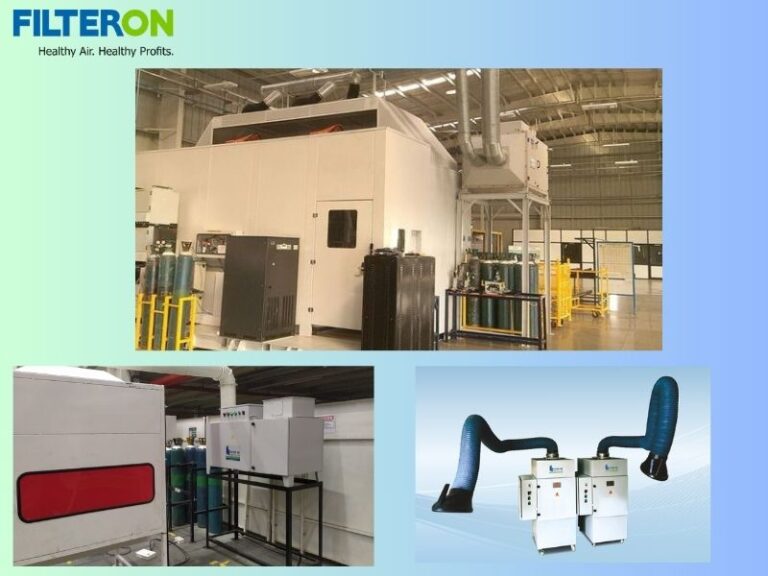
b) Manual Welding Booths & SPMs:

  • Designed for manual welding booths in various industries.
  • Mounted sideways or atop a weld cell, linked by flexible pipes or GI ducting.
  • Extract fumes from weld cell cabinets, filter through high-efficiency electrostatic air filters, and exhaust clean, safe air.
  • Provides four standard models and customized systems.
  • Suitable for medium amounts of dry fumes, small welding booths, welding SPMs, and DID-type welding stations.
  • Benefits include a high-efficiency electrostatic filter, zero replacement costs, and low running costs.
  • For larger setups, companies often rely on a welding smoke extractor with high-efficiency filters to remove hazardous particles.

“Read our full guide here.”

c) Portable Welding Fume Extraction:

Portable solutions like a mobile welding fume extractor are ideal for small workshops and electronics assembly lines. a drainpipe,

  • Essential tool for removing hazardous fumes during large crane-handled welding operations.
  • Features advanced electrostatic filtration technology with a pre-filter, after-filter, and ESP filter.
  • The suction head, positioned 200–300 mm from the fume source, captures and filters emissions.
  • Ideal for medium- to heavy-duty welding applications like earthmover bucket welding and propeller shaft welding in shipyards.
  • Compact and mobile, it requires zero filter replacement and adapts to changing operational needs.

“Read our full guide for this (coming soon).”

Oil Mist Collection Solutions By Filter ON
  1. Oil Mist Collection:

Choosing the right oil mist filters ensures long-term efficiency and minimal maintenance in industrial environments, so Filter ON, one of the best oil mist collector manufacturers, presents oil mist collection solutions for the following applications:

a) Oil Mist Collector for 5-Axis Grinding

  • Designed for CNC grinding machines and tool & cutter grinders.
  • Employs proven mist eliminator filters and advanced ESP technology.
  • Utilizes electrostatic precipitators for efficient fume and mist extraction.
  • Includes flexible hoses, PVC rigid piping, a drainpipe, and a sturdy stand.
  • Supports oil recovery and provides a cleaner, safer environment for small machine shops.

“Read our full guide for this (coming soon).”

b) Oil Mist Collector for Gear Grinding/Hobbing Machines

  • Designed for grinding operations in various industries.
  • Engineered with mist collector filters and high-efficiency ESP technology.
  • Captures oil mist and fumes at the source, delivering excellent filtration performance.
  • Electrostatic precipitators ensure clean air through enhanced filtration.
  • Systems can be tailored to fit unique setups and include accessories.
  • Offers long-term value and cleaner work environments with washable components and almost zero replacement cost.

“Read our full guide for this (coming soon).”

c) Oil Mist Collector for Cold Forging (Nut Bolt Mfg. Machines)

  • Handles medium to high volumes of oil-based fumes in forging environments.
  • Powered by electrostatic precipitators for high-efficiency air purification.
  • Uses advanced mist eliminator filters to capture harmful particles.
  • Ensures cleaner air and a safer workspace.
  • Delivers reliable, compatible solutions like alternatives to LOSMA mist collectors.
  • Enhances worker safety and supports continuous, high-performance operations.

“Read our full guide for this (coming soon).”

d) Oil Mist Collector for VMCs and HMCs Coolant

  • Designed for VMC and HMC machines, ideal for machining operations.
  • Manages water-soluble coolant mist efficiently, ensuring cleaner, safer workspaces.
  • Uses centrifugal technology to condense fine mist into larger droplets.
  • Redirects recovered coolant back into the machine, improving operational efficiency and reducing fluid waste.
  • Offers advanced solutions based on ESP technology for capturing finer particulate and smoke from oil-based processes.

“Read our full guide for this (coming soon).”

e) Oil Mist Collector for Sliding Heads

  • Capture and remove harmful mist particles from sliding heads and CNC machines.
  • Mounted on stands or installed sideways, connected via PVC ducting or flexible pipes.
  • Extract oil mist directly from the machine and pass it through a high-efficiency electrostatic air filter.
  • Release clean, safe air back into the shop environment.
  • Core technology: Electrostatic precipitators for superior air filtration.
  • Features reliable ESP technology, washable mist collector filters, and low operating costs.

“Read our full guide for this (coming soon).

f) Oil Mist Collector for Sawing Machine

  • Specialized for sawing machines using oil-based coolants.
  • Protects workers from dangerous fumes and mists.
  • Handles medium to high mist volumes with efficient filters.
  • Leverages electrostatic precipitators for reliable, clean air delivery.
  • Ensures easy installation, low maintenance, and long-term cost savings.

“Read our full guide for this (coming soon).”

g) Oil Mist Collector for EDM Machines

  • Essential for EDM machine operations.
  • Capture and filter harmful fumes directly at the source.
  • Effective blower technology and superior ESP modulation were installed.
  • Foundational on the electrostatic static precipitator working principle.
  • Compact design for effortless shop floor mobility.
  • Integrated electrostatic mist collector filters offer 99.99% filtration efficiency.
  • Compatible with Filter Mist mist collectors, delivering clean air with zero replacement cost.
  • Combines high performance with low operating costs.

“Read our full guide for this (coming soon).

h) Oil Mist Collector for Pilger Mills

  • Precision-engineered oil mist collectors designed for high-speed metal forming.
  • Captures and filters mist at the source, ensuring cleaner air and healthier working conditions.
  • Utilizes mist eliminator filters and advanced ESP technology for safe, pollutant-free workplaces.
  • Provides efficient, low-maintenance solutions for continuous, high-volume production environments.
  • Washable and reusable systems suitable for tube rolling and cold reduction in Pilger mills.
  • Delivers reliable, energy-efficient filtration meeting industrial safety and air quality standards.

“Read our full guide for this (coming soon).”

i) Oil Mist Collector for Ballpoint Tip-Making Machines.

  • Precision-engineered for ballpoint tip-making machines.
  • Captures and filters mist at the source, protecting worker health and maintaining air quality.
  • Uses electrostatic precipitators to capture microscopic pollutants.
  • Advanced ESP technology and mist eliminator filters ensure high-efficiency filtration.
  • Delivers low-maintenance solutions with minimal running costs.
  • Ideal for continuous, high-volume production environments.

j) Induction Heating Application Solutions

  • Utilizes ESP for fume extraction in induction heating.
  • Cleans the air by capturing and filtering medium-to-large-level pollutants.
  • Increases worker health by lowering skin irritation and respiratory ailments.
  • Increases productivity by reducing downtime and employee morale.
  • Makes sure that industry standards and environmental laws are followed.
  • Saves costs by reducing maintenance and equipment downtime.
  • Principal advantages include no replacement costs, minimal operating expenses, compact design, and simple setup.

“Read our full guide for this (coming soon).”

k) Oil Quenching Application Fume Solutions

  • Provides industrial smoke and fume extractors to eliminate hazardous impurities from oil quenching.
  • Filters and absorbs medium-to-high concentrations of dry fumes, ensuring clean air for employees.
  • Benefits include improved health, increased productivity, and compliance with environmental regulations. • Provides industrial smoke and fume extractors to eliminate hazardous impurities from oil quenching.
  • Filters and absorbs medium-to-high concentrations of dry fumes, ensuring clean air for employees.
  • Benefits include improved health, increased productivity, compliance with environmental regulations, and cost savings.
  • Principal advantages include reliable electrostatic precipitator working, high efficiency, washable and reusable filters, lower operating costs, and dual benefits: safe environment and oil recovery. and cost savings.
  • Principal advantages include reliable electrostatic precipitator working, high efficiency, washable and reusable filters, lower operating costs, and dual benefits: safe environment and oil recovery.

“Read our full guide for this (coming soon).”

Dust Collection Solutions By Filter ON
  1. Dust Collection Solutions:

Filter ON presents here different dust collection solutions in gauging, laser & plasma cutting, grinding, melting & furnace,, etc.

a) Dust Collector for Laser & Plasma Cutting Machines

  • Specially designed dust collectors and fume extractors for use in industrial settings.
  • Airflow capacities range from 1,000 CMH to 60,000 CMH.
  • High-performance German cartridge filters trap particles on the outer surface.
  • A compressed air jet dislodges accumulated dust, collected in a dustbin.
  • The self-cleaning mechanism maintains performance and extends cartridge life to 18-24 months.
  • Pressure gauges monitor filter condition in real time.
  • Ideal for grinding, welding, laser cutting, plasma cutting, and woodworking.
  • Offers 99%+ filtration efficiency, ensuring clean and safe air discharge.
  • Aligns with electrostatic precipitator working concepts for powerful filtration.

“Read our full guide for this (coming soon).”

b)Dust Collector for Grinding Machines

  • Provides pollution control solutions for grinding processes to maintain clean, safe work environments.
  • Includes industrial fume and smoke extractors to capture and filter grinding dust.
  • Features include high-efficiency filtration systems, compact designs, automatic cleaning mechanisms, and integration with industry pollution control devices.
  • Applications include metal grinding, tool sharpening stations, and precision grinding lines.
  • Leverages proven pollution reduction technology for environmental compliance and worker health protection.

“Read our full guide for this (coming soon).”

c) Dust Collector for Gauging 

  • Provides advanced solutions for dust-free gauging operations and worker health protection.
  • Features cartridge-type filters for superior air filtration.
  • Offers automatic reverse pulsed jet cleaning for minimal maintenance.
  • Includes add-on accessories like Spark Trap for enhanced safety.
  • Standard models range from 2000 CMH to 20,000 CMH.
  • Suitable for standalone workstations and manufacturing processes discharged by heavy fumes and dust.
  • Includes mounting stand, flexible pipes, GI ducting, and suction hood/canopies for targeted dust and fume extraction.

“Read our full guide for this (coming soon).”

d) Dust Collector for Melting & Furnace Operations

  • Engineered for melting and furnace operations to capture and filter fine dust and airborne particles.
  • Features high-efficiency filtration, compact, easy-to-install fume dust extractor designs, automatic cleaning, and compatibility with facility-wide pollution control systems.
  • Applications include melting and furnace operations and tool sharpening stations.
  • Solutions meet environmental standards, protect worker health, and reduce operational costs.

“Read our full guide for this (coming soon).”

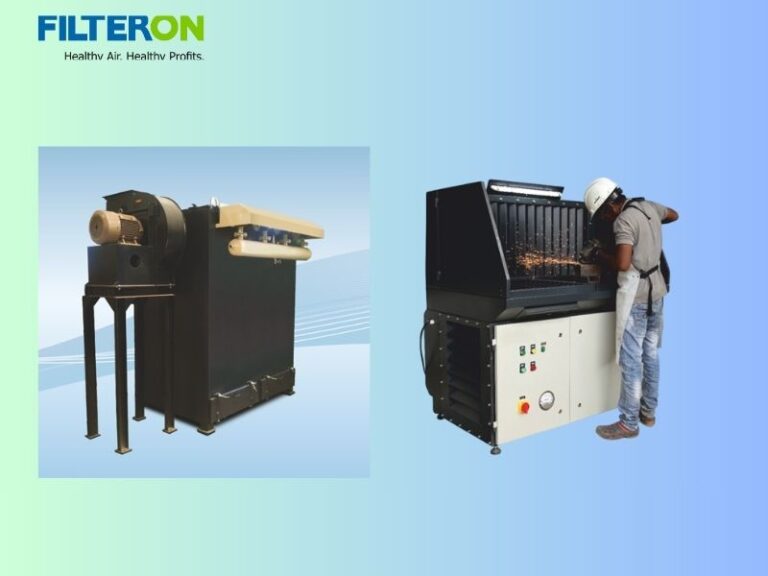
e) Downdraft Table for Dust Collection

  • Designed for demanding applications like welding, grinding, woodworking, buffing, and plasma cutting.
  • Functions as an integrated workstation, capturing fumes, fine dust, and smoke at the source.
  • Suitable for manual operations, especially in grinding and buffing.
  • Available in three standard models with flexibility in size and airflow capacity.
  • Built on principles similar to electrostatic precipitators working for filtration enhancement without rotor protection, it improves indoor air quality and prevents particulate build-up.
  • Ideal for standalone stations with high-volume dust or fume discharge.

“Read our full guide for this (coming soon).

Kitchen Dry Scrubber & Electrostatic Precipitator Solutions By Filter ON
  1. Electrostatic Dry Scrubbers for Industrial and Commercial Kitchens.

Restaurants and industrial kitchens benefit from a dry scrubber for kitchen exhaust that removes smoke, grease, and odors effectively. In heavy-duty industries, both wet and dry scrubbers are used to manage different types of pollutants.

  • Advanced air filtration solution for commercial kitchen exhaust systems.
  • Utilizes electrostatic precipitator principles to capture and filter out fine air pollutants and grease-laden particles.
  • Achieves 90–98% efficiency, removing particles as small as 0.01 microns.
  • Offers water savings, low pressure loss, and zero replacement costs.
  • Available in four models, it supports
  •  airflow capacities from 1200 CFM to 8000 CFM.
  • Compact design and reliable performance make it easy to install and operate in demanding environments.
  • Stands out among modern dry scrubbers for a cleaner, more sustainable cooking environment.
  • Our kitchen exhaust scrubber systems are compact, efficient, and built to meet environmental compliance.
  • Common electrostatic precipitator uses include welding fume extraction, kitchen exhaust cleaning, and oil mist collection.

“Read our full guide for this (coming soon).”

Total Clean Air Solutions By Filter ON (Centralized Systems)
Total Clean Air Solutions By Filter ON
  1. Total Clean Air Project (Turnkey) Solutions
  • Offers turnkey solutions for customized clean air systems for various applications.
  • Addresses challenges in centralized or industrial welding fume extractor systems.
  • The process includes calculating airflow requirements, selecting appropriate filtration technology, developing feasible options, and assessing options using the Total Ownership Cost concept.
  • The consultative native process empowers clients to make informed choices and achieve true value for money.
  • Post-installation, comprehensive trials and testing are conducted to ensure technical parameters match initial design targets.
  • Training in system operation, maintenance, and troubleshooting is provided.
  • AMC services are offered for trouble-free maintenance throughout the system’s life.
  • Modification and retrofit projects for existing systems are undertaken.
  • Trusted clean air partner for the manufacturing sector, combining advanced welding smoke extractor technology with end-to-end project delivery.

“Read our full guide for this (coming soon).”

Soldering & Laser Marking Fumes Extraction Solutions
Soldering & Laser Marking Fume Extraction Solutions
  1. Other Application Solutions.

Filter ON presents here some other application solutions, such as soldering application solutions, laser marking application solutions, and induction heating application solutions. These are discussed as follows:

a) Soldering Application Solutions

  • Ideal for maintaining air quality in the electronics, ICs, automation, automotive, and robotics industries.
  • Uses electrostatic or HEPA filters and efficient airflow technology to extract harmful soldering fumes.
  • Features versatile extraction setups like flexible pipes, semi-rigid aluminum ducts, adjustable arms, slotted benches, and top-mounted suction hoods.
  • Suitable for manual soldering stations and wave soldering applications.
  • Compact design and durable filter technology make it cost-effective.
  • Delivers reliable solutions with low running costs, minimal maintenance, and consistent performance.

“Read our full guide for this (coming soon).”

b) Laser Marking Machines Solutions

  • Specialized fume extraction systems for safe removal of hazardous fumes from laser marking processes.
  • Captures fumes at the source,rce, passes them through filtration, and releases purified air.
  • Available with electrostatic or HEPA filters, suitable for various industries.
  • Compatible with various ducting or pipe setups, offering versatility and easy integration.
  • Compact design, low energy consumption, and zero filter replacement cost for long-term operational savings

“Read our full guide for this (coming soon).”

So here Filter ON provides all these solutions to give an industry edge with its state-of-the-art electrostatic precipitation technology.

FAQ for fume extraction systems comprehensive guide:

This comprehensive guide highlights why industrial air filtration and fume extraction are critical for worker health, productivity, and compliance across industries.

Q1: What is the best oil mist collector for CNC machines?

Ans: The Filter ON oil mist collector is one of the best oil mist collector solutions for CNC machines. Models like M02/2K DP are highly efficient at removing harmful oil mist, fumes, and smoke from machining centers. As one of the best oil mist collector manufacturers, Filter ON provides reliable industrial mist collectors, mist eliminator filters, and oil mist filters designed for high-performance CNC applications. Learn more on our website.

 Ans: An electrostatic precipitator works by charging fine dust, smoke, and oil mist particles using high-voltage electrodes. These charged particles are then attracted to oppositely charged collection plates, effectively removing contaminants from the air. This electrostatic precipitator working principle makes it highly effective for industrial smoke extractors, oil mist collectors, and kitchen exhaust scrubbers.

 Ans: Dry scrubbers use absorbent materials or sorbents to capture pollutants, while wet scrubbers spray liquids to wash contaminants out of the air. In industries like food, chemical, and manufacturing, both dry and wet scrubbers are widely used. A dry scrubber for kitchen exhaust is preferred where water handling is a challenge, while wet-dry scrubbers are used in heavy industries with high particulate matter.

Ans: Welding produces harmful fumes containing metals, gases, and particulates that can damage workers’ health. A welding fume extractor or industrial welding fume extractor prevents inhalation risks, improves workplace safety, and ensures compliance with industrial safety standards. Many welding fume extractor manufacturers also provide fume extractor accessories like fume extractor filters and fume extractor pipes for better performance.

Ans:Portable welding fume extractors, or mobile welding fume extractors, provide flexibility to capture fumes directly at the source, especially in confined spaces or field jobs. These portable smoke extractors with fume extractor filters act as mobile air-cleaning systems, ensuring clean air wherever welding takes place.

Ans: Kitchen exhaust scrubbers are essential in restaurants, hotels, food-processing plants, and industrial kitchens. A dry scrubber for kitchen exhaust or a scrubber for kitchen exhaust removes grease, smoke, and odors to maintain hygiene and meet local pollution norms.

 Ans: Common electrostatic precipitator uses include controlling air pollution in power plants, steel plants, cement factories, chemical industries, and commercial kitchens. Their ability to remove fine particulates, oil mist, and fumes makes them ideal pollution control equipment for multiple industries.

 Ans: The industrial fume extractor price depends on factors like capacity, filtration technology, and brand. Basic portable fume extractors are cost-effective, while high-capacity industrial fume extractors and Kemper welding fume extractors may cost more. Contacting leading fume extractor manufacturers ensures the best price-to-performance ratio.

Ans: The efficiency of an electrostatic precipitator can reach up to 99%, making it more effective than many conventional fume extractor filters. Unlike mechanical filters, ESPs require less frequent replacement, making them a cost-efficient choice in the long run.

Ans: Without an oil mist collector for CNC machines, operators are exposed to harmful aerosols that can cause respiratory issues and slippery floors. Contaminated air also damages sensitive machine components. Using a filtermist mist collector, oil mist filters, or electrostatic oil mist collector ensures both worker safety and longer machine life.

Ans: Yes. While Losma mist collectors and Kemper fume extractors are well-known, Filter ON offers customized fume & mist collectors with advanced industrial filtration equipment. Our products often outperform competitors in terms of durability, filter life, and maintenance cost.

Ans: Pollution control devices in industries, such as scrubber and electrostatic precipitator systems, fume smoke extractors, and dust & fume collectors, help reduce emissions and meet environmental regulations. These pollution control solutions also protect employees, improve workplace safety, and enhance corporate sustainability efforts.

To know more about fume extraction standards and regulations, please check here.

Visit  blogs to learn more about the critical features of clean air system design and air pollution control systems created by Filter On India.
Contact us at marketing@filter-on.com.

Filter On India has been working towards “Mission Zero Pollution” for the last 40+ years as a clean air solutions partner for industries. We specialize and have expertise in industrial air filtration and fume extraction, including welding fumes, oil mist, coolant mist, dust collection, soldering, laser marking, laser cutting, plasma cutting, fumes in fastener manufacturing, ball point tip manufacturing, oil quenching, kitchen fumes, etc. Filter On has 70+ clean air solutions, so you can contact us for more information about our solutions. You can reach us through the web or visit us at our corporate office at Pune and our virtual locations at Delhi, Bangalore, Ahmadabad, Hyderabad, or Chennai locations.

Facebook
Twitter
LinkedIn